Creating effective AI-powered advertising campaigns no longer requires deep technical knowledge or coding skills. Modern no-code platforms make it simple for marketing teams to harness artificial intelligence for better ad performance.
No-code AI platforms enable businesses to deploy sophisticated advertising campaigns through drag-and-drop interfaces and automated workflows without writing a single line of code. These tools handle everything from audience targeting to creative optimization, making AI accessible to marketing teams of all sizes.
Advanced AI marketing platforms now offer predictive analytics, automated A/B testing, and smart budget allocation features that previously required data scientists to implement. We can use these capabilities to create more effective campaigns while reducing the time and resources needed to manage them.
Key Takeaways
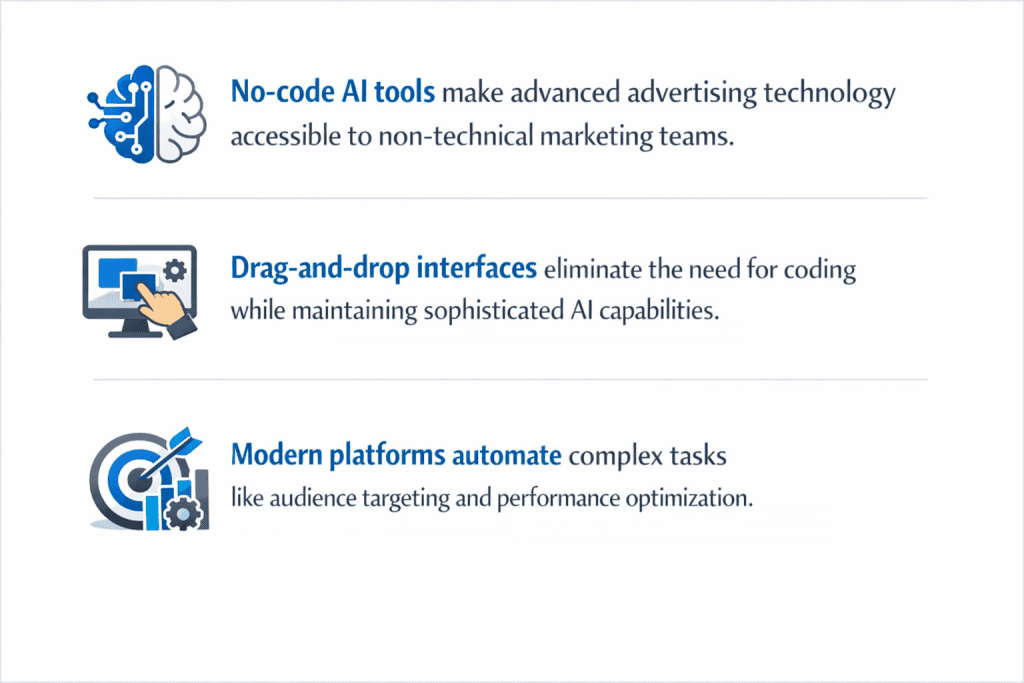
- No-code AI tools make advanced advertising technology accessible to non-technical marketing teams
- Drag-and-drop interfaces eliminate the need for coding while maintaining sophisticated AI capabilities
- Modern platforms automate complex tasks like audience targeting and performance optimization
Understanding No-Code Tools for AI Ad Deployment
No-code AI platforms have transformed how businesses create and manage digital advertising campaigns. They remove technical barriers and speed up deployment processes.
Defining No-Code AI Platforms
No-code AI platforms are specialized tools that enable users to build and deploy AI models without writing code. These platforms use visual interfaces and drag-and-drop elements to simplify complex AI operations.
Key components of no-code AI platforms include:
- Visual model builders
- Pre-built templates
- Automated data processing
- Integration capabilities
- User-friendly testing tools
We see these platforms being used for:
- Ad creative generation
- Audience targeting
- Campaign optimization
- Performance analytics
Evolution of No-Code AI in Marketing
The demand for no-code AI platforms has grown dramatically, especially in digital advertising. Marketing teams now use these tools for tasks that once required dedicated developers.
Modern no-code platforms feature:
- Real-time campaign adjustments
- Multi-channel ad deployment
- Automated A/B testing
- Smart budget allocation
The technology has evolved from basic automation to sophisticated predictive analytics and personalization engines.
Key Benefits for Business Professionals
No-code AI tools make artificial intelligence accessible to marketing teams of all sizes and technical abilities.
Primary advantages:
- Reduced implementation time
- Lower operational costs
- Faster market response
- Minimal technical training needed
These platforms allow marketing teams to:
- Create AI-powered ad campaigns quickly
- Test multiple ad variations simultaneously
- Analyze performance metrics in real-time
- Scale campaigns based on results
Small teams can now compete with larger organizations by leveraging the same AI capabilities through these accessible tools.
Core Features of No-Code AI Advertising Tools

Modern no-code AI advertising platforms combine powerful automation capabilities with simple interfaces. They help businesses create and manage effective ad campaigns without technical expertise.
User-Friendly Interfaces and Drag-and-Drop Functionality
No-code AI tools use visual interfaces that make complex AI functions accessible through simple point-and-click actions. Teams can build ad campaigns using familiar drag-and-drop elements.
The visual builders include pre-made templates and components for common advertising tasks like:
- Ad creative generation
- Audience targeting
- Budget optimization
- A/B testing setup
Clear dashboards display key metrics and campaign performance data in easy-to-understand charts and graphs.
Automation and Automated Workflows
AI-powered automation handles repetitive marketing tasks without manual intervention. Marketing teams can create automated workflows for:
Campaign Management:
- Auto-pause underperforming ads
- Scale up successful campaigns
- Adjust bids based on performance
- Schedule content posting
Audience Targeting:
- Dynamic audience segmentation
- Lookalike audience creation
- Real-time optimization
Integration With Data Sources and Third-Party Platforms
These platforms connect seamlessly with popular advertising channels and analytics tools. Direct integrations enable data flow between:
Ad Platforms:
- Google Ads
- Meta Ads
- LinkedIn Ads
- TikTok Ads
Analytics & CRM:
- Google Analytics
- Salesforce
- HubSpot
- Customer databases
Real-time data syncing ensures campaigns stay optimized based on the latest performance metrics.
Scalability and Flexibility
No-code platforms adapt to growing business needs without requiring technical changes. Teams can quickly scale campaigns across:
- Multiple ad channels
- Different geographic regions
- Various audience segments
- New product lines
Flexible pricing models let businesses start small and expand usage as needed. Custom rules and triggers help automate scaling decisions based on performance metrics and budget constraints.
API access enables advanced customization when needed while maintaining the no-code simplicity for standard operations.
Popular No-Code AI Tools for Deploying Ads
These specialized platforms enable marketers to harness AI for ad optimization without writing code. Each tool offers unique features for creating, testing, and deploying AI-powered advertising campaigns.
Akkio
Akkio’s no-code machine learning platform transforms how marketing teams deploy AI-driven ads. The platform excels at predictive analytics for ad performance.
The drag-and-drop interface makes it simple to upload advertising data and create prediction models. We can use these models to forecast click-through rates and conversion potential.
Key features include:
- Real-time performance monitoring
- Automated A/B testing
- Integration with major ad platforms
- Custom audience targeting
Obviously AI
Obviously AI specializes in predictive modeling for ad campaigns. The platform helps predict which ads will perform best before spending money on them.
We can connect our advertising data directly to Obviously AI through their user-friendly interface. The tool analyzes past performance to recommend optimal:
- Ad placement
- Budget allocation
- Target demographics
- Creative elements
Levity
Levity focuses on automating visual aspects of ad creation and optimization. The platform uses AI to analyze image and video content for advertising effectiveness.
Key capabilities:
- Content scoring: Rates ad visuals based on predicted engagement
- Creative recommendations: Suggests improvements for images and videos
- Performance tracking: Monitors how different visual elements affect conversion rates
The platform integrates with popular advertising channels and provides actionable insights within minutes of uploading content.
Advanced No-Code AI Platforms and Their Applications
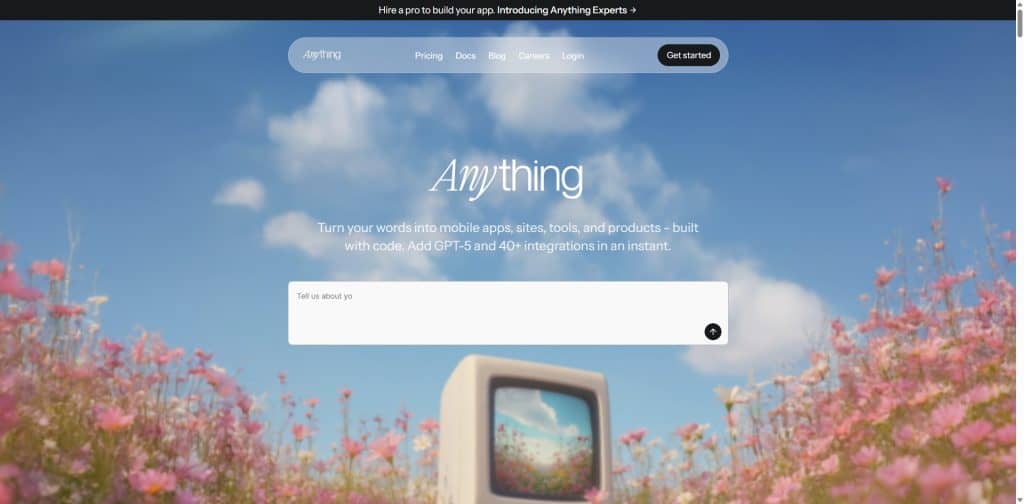
No-code AI platforms are transforming how businesses deploy AI solutions in 2025. These powerful tools let teams create and launch AI models without writing complex code.
Google AutoML and Google Teachable Machine
Google AutoML makes AI model creation simple through an intuitive drag-and-drop interface. We can use it to build custom models for image recognition, text analysis, and product recommendations.
Google Teachable Machine excels at quick prototyping. We can train basic AI models right in our web browser by uploading examples and clicking a few buttons.
Key features of these platforms:
- AutoML Vision: Analyzes images with 90%+ accuracy
- AutoML Natural Language: Processes text in 50+ languages
- Teachable Machine: Creates models in under 5 minutes
Microsoft Azure AI
Azure AI offers pre-built AI services that integrate smoothly with existing business tools. We can deploy chatbots, process forms, and analyze customer sentiment without coding experience.
The platform includes:
- Computer vision services
- Text analytics tools
- Speech recognition capabilities
- Language understanding models
Azure’s drag-and-drop interface makes it easy to connect these AI services to our applications. The platform handles scaling automatically.
Amazon SageMaker
Amazon SageMaker provides visual tools to build and deploy machine learning models. The platform automates complex tasks like data preparation and model optimization.
Key benefits:
- Built-in algorithms: Ready to use for common AI tasks
- Automated training: Optimizes model performance
- One-click deployment: Launches models to production instantly
SageMaker Canvas lets business analysts create AI models through point-and-click interfaces.
Clarifai and Apple CreateML
Clarifai specializes in visual recognition tasks with an easy-to-use interface. We can train custom models to identify objects, faces, or brand logos in images.
Apple CreateML focuses on iOS app integration. The tool enables:
- Image classification
- Sound analysis
- Text prediction
- Motion detection
Both platforms offer drag-and-drop model training and testing. We can export finished models directly to our applications.
Key AI Capabilities Offered by No-Code Tools
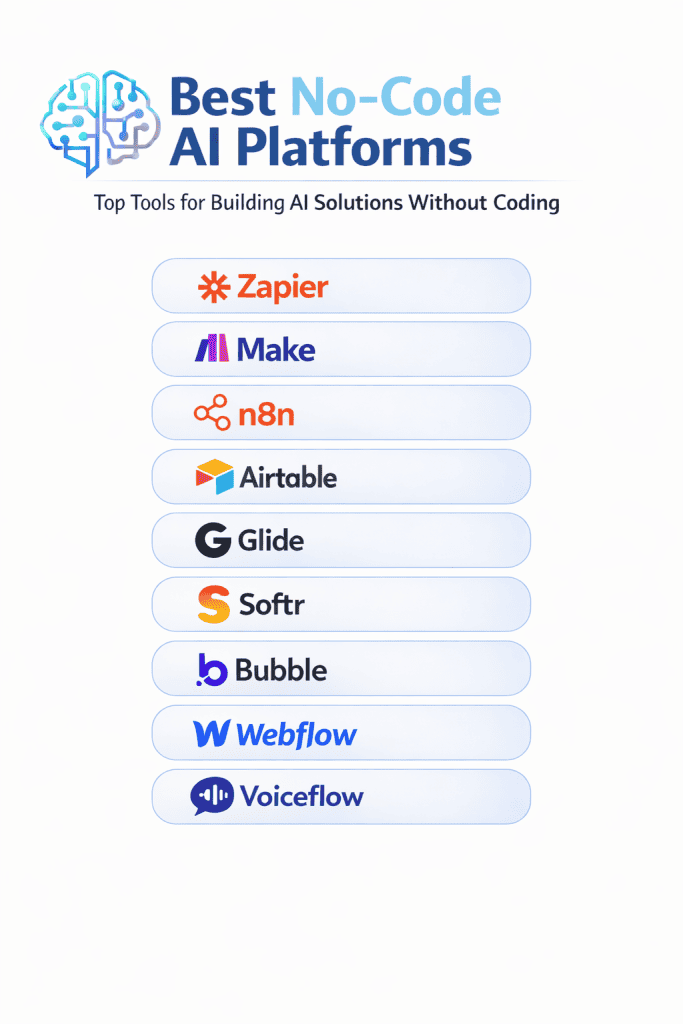
Modern no-code AI platforms give marketers powerful tools to create and optimize ad campaigns through automation and machine learning. These tools handle complex AI tasks through simple drag-and-drop interfaces.
Predictive Analytics and Modeling
Automated machine learning capabilities let us build predictive models that forecast ad performance and audience behavior without writing code. We can easily process campaign data to identify patterns and trends.
These tools analyze historical ad metrics like click-through rates, conversions, and engagement to predict future campaign success. The models automatically handle feature selection and optimization.
We can create custom predictive models for:
- Audience targeting and segmentation
- Budget optimization
- Ad placement effectiveness
- Campaign ROI forecasting
Natural Language Processing for Ad Copy
NLP tools help us craft more compelling ad copy by analyzing successful ads and generating optimized variations. We can test different messaging approaches automatically.
The AI analyzes:
- Tone and sentiment
- Key phrases that drive engagement
- Grammar and readability
- Brand voice consistency
Modern NLP models can even generate initial ad copy drafts that we can refine and customize. This speeds up the creative process while maintaining quality control.
Computer Vision and Image Recognition
Visual AI capabilities help optimize ad images and videos through automated analysis. Deep learning models can process visual content to ensure brand consistency and engagement.
Key image recognition features:
- Object and scene detection
- Brand logo identification
- Image quality assessment
- Visual style matching
Transfer learning allows these tools to understand visual brand guidelines and apply them consistently across campaigns. We can automatically tag and categorize ad creative assets.
Computer vision also helps analyze competitor ads to identify successful visual elements and trends. This informs our creative strategy and keeps campaigns competitive.
Real-World Use Cases for No-Code AI Ad Deployment
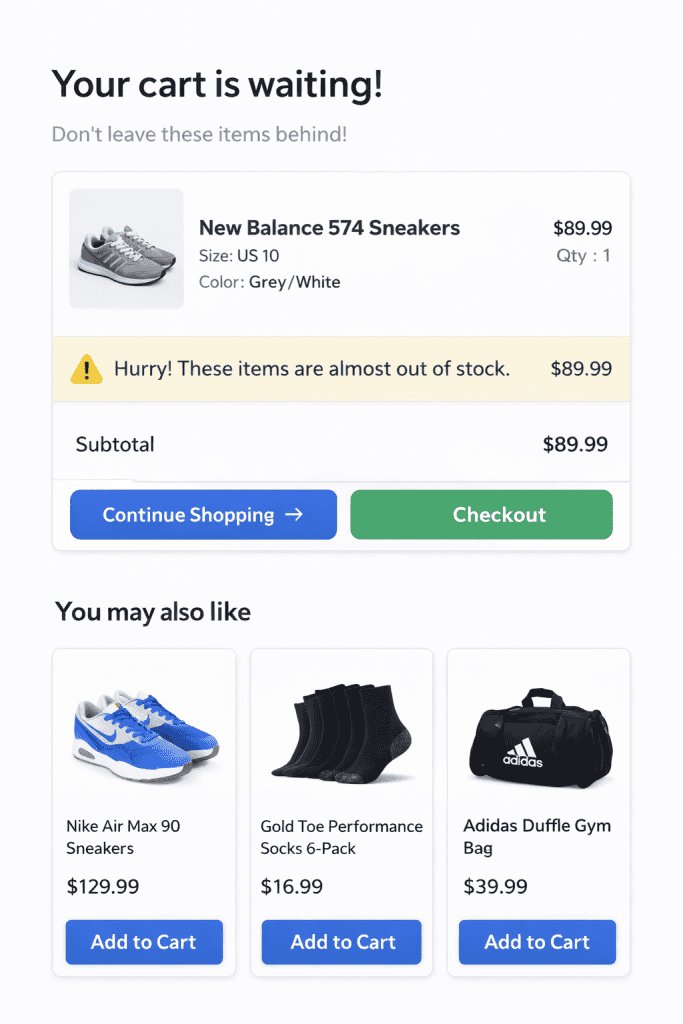
No-code AI platforms enable businesses to create sophisticated ad campaigns through simple drag-and-drop interfaces and pre-built templates. No-code AI tools let marketing teams quickly implement and optimize advertising without technical expertise.
E-Commerce Campaigns
AI-powered product recommendations help online stores boost sales by showing relevant items to shoppers. We can set up dynamic product ads that automatically update based on inventory and pricing changes.
Major retailers use no-code AI platforms to:
- Retarget abandoned cart customers
- Create personalized email campaigns
- Display related product suggestions
- Optimize ad spend across channels
These tools analyze purchase history and browsing behavior to identify high-value customers and create lookalike audiences for targeting similar shoppers.
Lead Generation and Customer Segmentation
No-code AI helps segment customers into distinct groups based on behavior patterns and demographics. Marketing teams can build targeted campaigns for each segment without writing complex queries.
Key capabilities include:
- Automated lead scoring
- Predictive analytics for conversion likelihood
- Custom audience creation
- Multi-channel campaign coordination
AI chatbots qualify leads 24/7 by engaging website visitors and collecting relevant information. The data feeds directly into segmentation tools for improved targeting.
Content Creation and Personalization
Smart AI tools generate ad variations tailored to different customer segments. We can test multiple versions to find the most effective messaging.
The technology enables:
- Dynamic headline optimization
- Image selection based on user preferences
- Automated A/B testing
- Real-time content adjustments
Personalization engines analyze customer interactions to deliver the right message at the right time. This creates more engaging experiences that drive higher conversion rates.
Industry-Specific Applications
No-code AI advertising tools transform business operations across sectors by automating complex tasks and generating targeted campaigns without technical expertise.
These tools deliver measurable ROI through customized solutions that address unique industry challenges.
Healthcare
AI-powered platforms help healthcare providers create personalized patient outreach campaigns and appointment reminders. Medical practices use drag-and-drop interfaces to analyze patient data and target specific demographics for preventive care initiatives.
Digital health companies leverage no-code tools to promote telehealth services through smart ad targeting. These platforms automatically adjust messaging based on patient age groups and medical conditions.
We see practices using AI to optimize ad spend by analyzing which healthcare services generate the highest engagement in specific geographic areas.
Finance
Financial institutions use no-code platforms to create compliant marketing campaigns that resonate with different customer segments. Banks deploy AI tools to analyze spending patterns and deliver relevant credit card or loan offers.
Investment firms automate their social media advertising by using predictive AI models to identify potential clients interested in wealth management services.
These platforms help fintech companies test multiple ad variations simultaneously while maintaining regulatory compliance. The AI automatically adjusts messaging based on market conditions and customer responses.
Supply Chain Management
Logistics companies utilize no-code AI to create targeted ads for warehousing and transportation services. The platforms analyze shipping data to identify businesses needing specific supply chain solutions.
These tools help identify seasonal demand patterns and automatically adjust advertising strategies. Companies optimize their ad spending by targeting businesses during their peak shipping periods.
Real-time inventory data feeds into ad campaigns, ensuring promotions align with available capacity and resources.
Recruitment and Human Resources
HR teams deploy AI-assisted marketing tools to create job postings that attract qualified candidates. The platforms analyze successful hiring patterns to optimize job ad language and placement.
No-code solutions help companies target passive job seekers through intelligent social media campaigns. These tools track engagement metrics to refine recruitment messaging automatically.
We see improved candidate quality when AI tools match job requirements with audience targeting parameters. The platforms automatically adjust ad spend based on application quality and response rates.
Workflow Automation and Process Optimization
No-code tools revolutionize AI ad deployment by eliminating repetitive manual tasks and streamlining complex workflows into simple automated processes.
Modern workflow automation platforms enable teams to build sophisticated ad campaigns with minimal technical expertise.
Automated Processes in Ad Deployment
AI-powered automation platforms handle routine tasks like audience targeting, creative asset management, and performance monitoring. This frees up our teams to focus on strategy and creative development.
We can set up automated triggers to adjust ad spend based on real-time performance metrics. The system automatically optimizes budgets across channels for maximum ROI.
No-code platforms offer drag-and-drop interfaces to create complex workflow rules. These tools connect seamlessly with popular advertising platforms and analytics tools.
Operational Efficiency and Cost Savings
By automating manual processes, we reduce human error and cut operational costs by up to 40%. Teams spend less time on repetitive tasks and more time on high-value activities.
Integrated workflow systems enable real-time collaboration between marketing, creative, and analytics teams. This reduces bottlenecks and accelerates campaign launches.
Key benefits include:
- Reduced labor costs
- Faster campaign iterations
- Fewer errors in ad deployment
- Improved team productivity
Rapid Deployment and Ease of Use
The visual interface of no-code platforms makes it simple to create and modify automated workflows. New team members can learn the system in days rather than weeks.
Ready-to-use templates speed up deployment of common ad campaigns. We can customize these templates without writing code.
Built-in testing tools let us validate workflows before going live. This ensures smooth operation and prevents costly mistakes during campaign launches.
Considerations for Implementing No-Code AI Tools
Creating effective AI advertising campaigns requires careful planning around data, resources, and compliance measures to maximize results while minimizing risks.
Smart implementation choices at the start will save time and prevent costly mistakes.
Data Preparation and Preprocessing
Quality data forms the foundation of any AI advertising system. Proper data processing enables accurate targeting and performance.
We recommend starting with these key data preparation steps:
- Clean and standardize data formats
- Remove duplicate or incomplete records
- Label data appropriately for model training
- Validate data quality and accuracy
Data volume matters significantly. We need enough examples to train the AI effectively—typically thousands of records for basic ad targeting and tens of thousands for complex campaigns.
Regular data updates keep the system current. Set up automated feeds where possible to refresh data daily or weekly based on campaign needs.
Budget and Resource Allocation
No-code AI platforms require different resource planning than traditional advertising tools. We must account for both direct and indirect costs.
Direct Costs:
- Platform subscription fees
- Data storage
- API usage charges
- Model training resources
Indirect Costs:
- Team training time
- Campaign monitoring
- Customer support staff
- System maintenance
Start with a small pilot project to test effectiveness before scaling up. This approach helps us identify real costs and resource needs.
Security and Compliance
AI advertising tools must meet strict security standards to protect sensitive data and maintain compliance.
Essential security measures include:
- Data encryption at rest and in transit
- Regular security audits
- Access controls and user permissions
- Automated compliance monitoring
We must verify platform compliance with relevant regulations like GDPR, CCPA, and industry-specific requirements. Document all security measures and create clear protocols for handling data breaches.
Review security settings quarterly and update access permissions when team members change roles.
Evaluating and Comparing No-Code AI Solutions
No-code AI platforms offer different strengths in analytics, support, and system compatibility.
We must look at specific metrics and resources to pick the right tool.
Performance Metrics and Real-Time Analytics
Real-time tracking helps us measure campaign success quickly. We track key metrics like click-through rates, conversion rates, and ROI directly in the platform.
Most platforms display data through clean dashboards with charts and graphs. This makes it easy to spot trends and adjust campaigns.
Machine learning validation tools check if our AI models work well. They measure accuracy, speed, and reliability before we launch ads.
Key metrics to monitor:
- Ad performance scores
- Audience engagement rates
- Cost per acquisition
- Model accuracy percentage
Support and Community Resources
Active user communities share tips and solutions on forums and social media. This helps us solve problems faster than waiting for official support.
Many platforms offer specialized training through video tutorials and documentation. These resources help new users create effective campaigns quickly.
Professional support teams provide direct help through chat, email, or phone. Response times vary between platforms.
Platform Compatibility
We need tools that work with our existing marketing stack. Most platforms connect with popular ad networks and analytics tools.
Modern no-code solutions use APIs and pre-built integrations to sync with:
- Social media platforms
- CRM systems
- Email marketing tools
- Payment processors
Mobile compatibility matters too. Good platforms let us monitor and adjust campaigns from phones or tablets.
Emerging Trends and the Future of No-Code AI in Ad Deployment
The integration of AI into no-code platforms is transforming digital advertising through automated workflows and intelligent features.
These advancements make AI-powered ad creation and optimization accessible to marketing teams without coding expertise.
Generative AI Innovations
AI-powered tools are revolutionizing ad creation by automatically generating variations of ad copy, images, and video content. RunwayML’s no-code interface lets us create professional video ads through simple text prompts.
We’re seeing platforms that can generate dozens of ad variants in minutes, testing different messaging and visual elements automatically. DataRobot’s visual interface helps optimize these variations for different audience segments.
Key features:
- Auto-generated ad copy based on product descriptions
- AI-powered image and video creation
- Dynamic content personalization
- Real-time performance optimization
Anomaly Detection and Advanced AI Techniques
NanoNets and Causaly AI bring sophisticated monitoring capabilities to no-code ad platforms. These tools scan for unusual patterns in ad performance and audience behavior.
We can now detect:
- Unusual spending patterns
- Traffic anomalies
- Conversion rate fluctuations
- Brand safety issues
PyCaret’s visual interface enables marketers to implement complex AI models without coding. This helps predict ad performance and identify potential issues before they impact campaigns.
Integration with OpenAI and Third-Party APIs
No-code platforms increasingly connect with powerful AI services through simple drag-and-drop interfaces. OpenAI’s GPT models can be integrated to enhance ad copywriting and content generation.
Popular integrations include:
- ChatGPT for conversational ads
- DALL-E for image creation
- Whisper for audio transcription
- Custom API connections
These tools work together seamlessly, letting us create sophisticated ad campaigns without writing code. Pre-built templates and connectors make it easy to combine multiple AI services into a single workflow.
Frequently Asked Questions
No-code platforms enable marketers and business owners to deploy AI-powered advertising without technical skills. These tools offer drag-and-drop interfaces, pre-built templates, and automated deployment options.
What are the top-rated no-code platforms for deploying AI-driven ad campaigns?
Google AutoML and Microsoft Power Automate rank among the most popular platforms for AI ad deployment. These tools provide cloud-based solutions with robust features for campaign management.
Many businesses prefer platforms that integrate directly with major ad networks and offer built-in analytics capabilities.
Can AI applications be built using no-code platforms without any coding expertise?
Yes, no-code AI tools use drag-and-drop interfaces that let anyone create AI applications without writing code. Users can select pre-built components and connect them visually.
The platforms handle all technical aspects automatically, letting users focus on strategy and creative elements.
Are there cost-effective or free no-code tools available for creating AI apps?
Many platforms offer free starter plans or trial periods to test their features. Some tools use tiered pricing based on usage levels or features needed.
Small businesses can start with basic plans and upgrade as their needs grow.
What features should I look for in a no-code AI app builder?
Essential features include visual campaign builders, template libraries, and integration capabilities with major ad platforms.
Scalable hosting and flexible deployment options are crucial for growing campaigns.
Real-time analytics and A/B testing tools help optimize performance.
How do user reviews rate various no-code tools for AI ad implementations?
Users consistently praise platforms that offer intuitive interfaces and reliable customer support.
Most positive reviews highlight ease of use and quick deployment capabilities.
Is it possible to find open-source no-code app builders that support AI integrations?
Open-source no-code AI tools exist but often require more technical setup than commercial platforms.
Several community-driven projects provide basic AI functionality with room for customization.