Shopping online has changed a lot in recent years. You can now see how furniture looks in your living room or try on glasses without visiting a shop.
Augmented reality in ecommerce lets customers view and interact with products in their own space before buying, which boosts sales by up to 94% and cuts returns.
We’ve watched AR technology move from a fancy extra feature to a must-have tool for online shops. Major brands like IKEA, Sephora, and ASOS use AR to help shoppers make better choices.
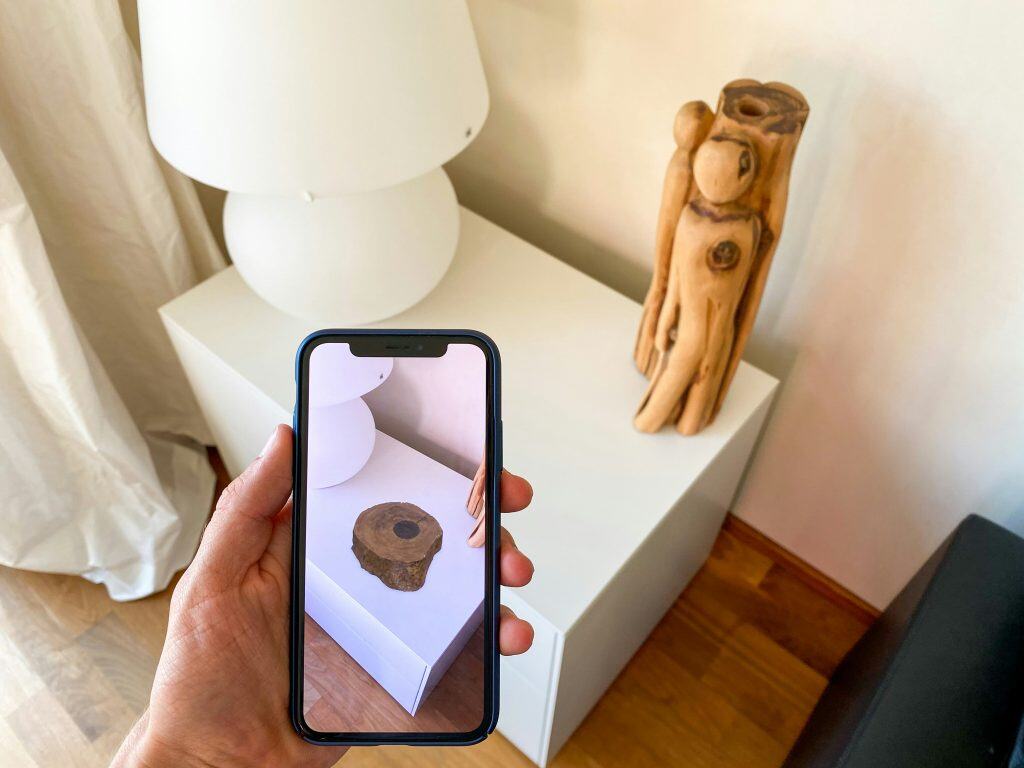
The technology works through your smartphone camera to place digital items into your real world. This shift matters because 40% of buyers would pay more after using AR.
Online retailers see higher conversion rates and fewer product returns when they add AR features. We’ll show you how AR works in ecommerce, which tools you need, and how top brands use it to improve their sales.
Key Takeaways
- AR in ecommerce overlays digital products onto real environments through smartphone cameras to help customers visualise items before purchase
- Virtual try-ons and product preview tools increase conversion rates whilst reducing return costs for online retailers
- Leading ecommerce platforms now offer AR integration options that work without expensive hardware or technical expertise
What Is AR in Ecommerce?
Augmented reality in ecommerce overlays digital product images onto real-world environments through smartphone cameras or tablets. This technology bridges the gap between online browsing and physical shopping by letting customers visualise items before purchase.
Augmented Reality Defined
Augmented reality blends digital elements with the physical world around us. AR technology uses device cameras and sensors to place virtual objects into real spaces that we can see through our screens.
Unlike completely digital experiences, AR enhances what already exists in our environment. We point our phone at a room and AR adds a virtual sofa or lamp exactly where it would sit in real life.
The technology tracks surfaces and lighting to make digital items look realistic. Modern smartphones have built-in AR capabilities that work without special equipment.
This makes AR accessible to over 7 billion mobile users worldwide.
How AR Transforms Digital Retail
AR for ecommerce solves a major problem with online shopping: uncertainty about products. We can now see true-to-scale 3D models of furniture in our homes or try on makeup virtually before buying.
AR ads achieve 94% more conversions than standard advertisements. This happens because customers feel more confident about their purchases when they can visualise products accurately.
The impact on returns is significant. Reducing purchase returns by 5% whilst boosting conversions by 40% shows real financial benefits.
A NielsenIQ survey found 56% of shoppers feel more confident after using AR features.
Distinction Between AR and VR
AR and VR serve different purposes in retail despite often being confused. AR adds to our real world whilst VR replaces it entirely.
Virtual reality creates completely artificial environments that block out physical surroundings. VR requires headsets and controllers that cost hundreds of pounds.
AR runs on smartphones we already own.
| Feature | AR | VR |
|---|---|---|
| Experience | Adds to real world | Creates artificial world |
| Equipment | Smartphone or tablet | Headset and controllers |
| User awareness | Aware of surroundings | Fully immersed |
| Accessibility | Billions of users | Limited hardware access |
The accessibility difference matters for ecommerce. We can offer AR experiences to nearly every customer without asking them to buy extra equipment.
Key Benefits of AR for Online Retail
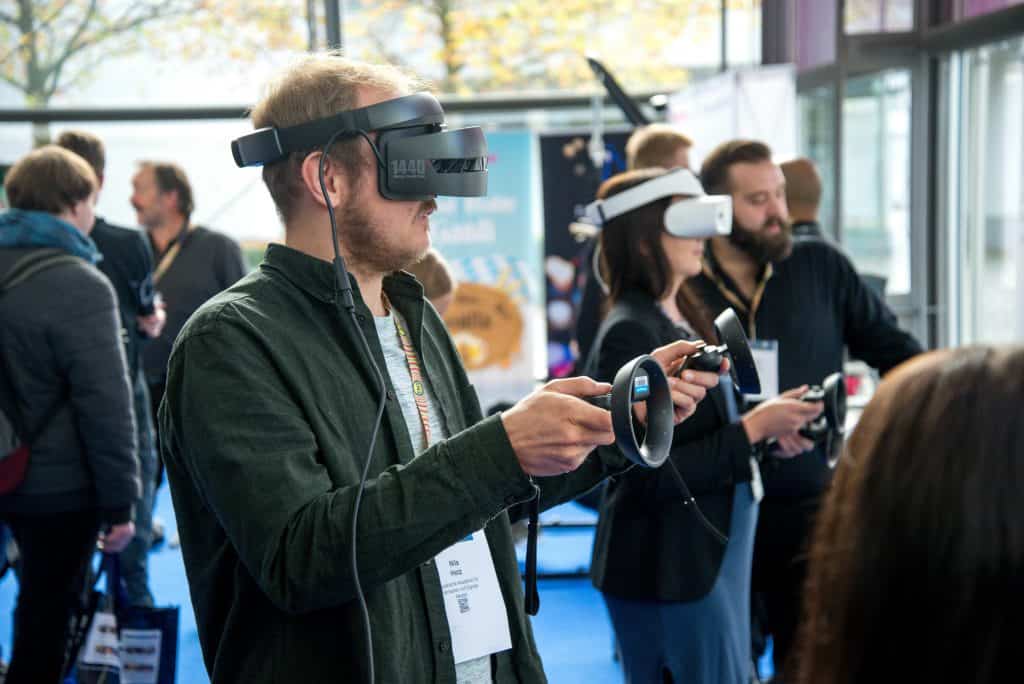
AR technology delivers measurable improvements across multiple aspects of online retail, from conversion rates to customer satisfaction. Retailers implementing AR experiences see significant reductions in product returns while building stronger connections with their customers through immersive, personalised shopping.
Boosting Conversion Rates
AR technology transforms how customers make purchasing decisions. When shoppers can visualise products in their own space before buying, they feel more confident about their choices.
Products with AR content see 94% higher conversion rates compared to those without it. This dramatic increase happens because customers can interact with products in meaningful ways.
They see how furniture fits in their living room or how makeup looks on their face. DFS, the UK’s leading sofa retailer, experienced a 112% conversion lift after implementing AR across 10,000 products.
Their revenue per visit increased by 106% for customers who used 3D and AR features. Research shows that 90% higher conversion rates occur when customers engage with AR compared to those who don’t.
Some shoppers value the technology so much that 40% would pay more for products they could test through AR.
Reducing Return Rates
Product returns cost online retailers billions each year. AR addresses this challenge by helping customers make informed decisions before they buy.
High return rates plague eCommerce, with 49% of UK online shoppers returning items within the past year. That figure jumps to 60% for shoppers aged 16-34.
The main reason after damaged products is that items were “not as described” at 27%. AR solves this problem through accurate visualisation.
Customers see products in 3D, try virtual try-ons, and view realistic demonstrations. This “try before you buy” approach means fewer surprises when the product arrives.
We see the impact most clearly in furniture and fashion retail. When customers place a virtual sofa in their room, they immediately know if it fits and matches their décor.
Virtual makeup try-ons show exact colours and finishes. These experiences eliminate guesswork and reduce returns significantly.
The technology works because it bridges the gap between physical and online shopping that traditional product photos cannot.
Improving Customer Engagement
AR experiences are 200% more engaging than standard product pages. This increased engagement translates directly to better business outcomes and stronger customer relationships.
The interactive nature of AR keeps customers exploring products longer. Facebook’s AR partner Vertebrae found that retailers using AR during the pandemic saw a 19% increase in customer engagement.
This matters because engaged customers develop brand loyalty and return for future purchases. L’Oréal’s ModiFace AR platform generated over a billion visits with customers spending an average of seven minutes using the service.
This level of engagement far exceeds traditional product browsing. The brand saw conversion rates triple when AR was available.
Key engagement metrics improved by AR:
- Time spent with products increases
- Social sharing of AR experiences grows
- Repeat visits become more frequent
- Brand recall strengthens
71% of consumers say they would shop more often if retailers offered AR experiences. Meanwhile, 61% actively prefer retailers who provide AR options.
Enhancing Personalisation
AR creates personalised shopping experiences that match each customer’s unique needs and environment. This level of customisation builds customer satisfaction and loyalty.
Customers can see how products fit their specific lifestyle, space, and preferences. A virtual try-on shows how glasses suit their face shape.
AR furniture placement accounts for their exact room dimensions and lighting. This personalisation makes shopping feel tailored rather than generic.
ASOS implemented AR technology through their “See My Fit” tool, allowing shoppers to view products on different body types. This personalised approach helped customers understand how garments would look on bodies similar to their own.
Beauty brands lead in AR personalisation. L’Oréal offers virtual makeup try-ons, hair colour simulations, and personalised skin diagnostics.
These tools provide customised recommendations based on individual features and skin tones. The technology also remembers preferences across sessions.
Customers can save their favourite looks, compare options side by side, and share personalised experiences with friends for feedback. This creates an immersive shopping experience that feels designed specifically for each individual.
Essential Use Cases and Applications

AR technology delivers practical solutions that address real shopping challenges. Customers can test products virtually in their own spaces, examine items in three dimensions, and explore complete product ranges without visiting physical stores.
Virtual Try-On Solutions
Virtual try-on technology allows shoppers to see how products look on themselves before making a purchase. This AR shopping experience works particularly well for fashion items, accessories, and cosmetics.
Customers use their smartphone cameras to overlay digital versions of products onto their real-time image. The technology helps reduce uncertainty about fit and appearance.
Shoppers can try on multiple items quickly without the hassle of changing clothes or applying makeup. This speeds up the decision-making process whilst building confidence in product choices.
Major retailers have seen significant benefits from implementing these AR experiences. The technology reduces return rates because customers know exactly what they’re getting.
Virtual try-ons also increase engagement, as shoppers spend more time exploring different options and combinations on the platform.
Product Visualisation and Previews
Product visualisation through AR lets customers place digital versions of items in their actual environment. We can view furniture in our living rooms, see how appliances fit in our kitchens, or check if decorative items match our existing décor.
This AR product preview capability bridges the gap between online and physical shopping. The technology provides accurate representations of scale, proportion, and spatial relationships.
Customers rotate products 360 degrees, zoom in for detail, and examine items from every angle. This detailed visualization reduces guesswork and helps people make informed decisions.
These AR shopping features particularly benefit large purchases where size and compatibility matter most. Customers avoid buying items that won’t fit or clash with their existing space, which directly reduces post-purchase dissatisfaction.
Virtual Showrooms and Demonstrations
Virtual showrooms create complete shopping environments accessible from anywhere. These digital spaces allow customers to browse entire product catalogues in an immersive setting.
We can walk through virtual stores, examine products up close, and access detailed information without leaving home. AR demonstrations show how products work in real-world scenarios.
Customers see appliances in operation, watch furniture assembly processes, or understand product features through interactive overlays. This approach transforms how shoppers interact with products online.
The virtual showroom experience offers convenience whilst maintaining the exploratory nature of traditional shopping. Customers discover products they might not have found through standard browsing, and businesses showcase their full range without physical space limitations.
Core AR Technologies and Tools in Ecommerce

Different AR systems work in distinct ways to overlay digital content onto the real world. The technology you choose affects everything from customer experience to implementation costs.
Marker-Based and Markerless AR
Marker-based AR needs a specific image, QR code, or object to trigger the experience. When your phone camera spots the marker, it brings up digital overlays like 3D models or extra info.
This approach gives you precise control over where and when AR content pops up. Jack Daniels, for example, uses bottle markers so customers can unlock story-driven experiences by scanning them.
Marker-based AR is reliable and works great for packaging, print ads, and in-store displays.
Markerless AR skips the need for special triggers. It uses your device’s sensors, camera, and GPS to drop digital objects right into your environment.
This is what you usually see in ecommerce. You can preview furniture in your living room or see how art looks on your wall—no markers needed.
IKEA’s Place app is a perfect example, letting you position true-to-scale 3D furniture anywhere in your space. It’s a seamless experience and awesome for visualising products.
Projection-Based and Superimposition-Based AR
Projection-based AR beams synthetic light onto real surfaces to create interactive displays. You can touch and move these projected elements in real time.
MAC Cosmetics uses smart mirrors with this tech so customers can try on virtual makeup without touching anything.
The smart mirror market is growing fast, with projections hitting $1,132.94 million by 2032. Projection-based systems are also starting to show up in homes, not just retail stores.
Superimposition-based AR swaps out part of what you see with an augmented version. It usually relies on object recognition to spot items first.
This tech is great for showing different colours, finishes, or styles of the same product. Both projection and superimposition AR need more specialised hardware than mobile AR, so you’ll mostly find them in physical stores or high-end setups.
Mobile AR and Platform Integrations
Mobile AR runs on smartphones and tablets, making it super accessible. ARKit from Apple and ARCore from Google are the main platforms developers use to build AR apps.
ARKit powers IKEA Place, delivering realistic furniture placement on iPhones. ARCore does the same for Android phones.
These platforms handle tricky stuff like motion tracking and light estimation automatically. Most AR solutions in ecommerce focus on mobile-first, so customers just open an app or use web-based AR in their browser—no fancy equipment needed.
Third-party tools like Shopify’s AR features make it easy to add AR to your online store. These integrations work with existing ecommerce platforms, saving time and money.
Best Practices for AR Integration in Ecommerce

To make AR work well, you need high-quality 3D assets, smart user experience design, and regular performance tracking. These all help create smooth shopping experiences that boost confidence and conversions.
3D Modelling and Asset Creation
Good 3D models are the backbone of any strong AR experience. You’ve got to balance visual detail with file size so things load quickly on any device.
Professional 3D modelling for AR should focus on accuracy but not at the cost of performance. Models need proper texture mapping, the right number of polygons, and correct scaling to look real in your space.
Asset management systems keep things consistent across your product catalogue. It’s smart to use clear naming conventions and version control for all 3D assets.
Automated optimisation tools can compress files and tweak quality based on device capability. For ecommerce apps, you’ll want multiple versions of each model—high-res for desktop, lighter for mobile.
Tools like Unity help developers build AR experiences that work well across different platforms.
| Asset Requirement | Desktop Target | Mobile Target |
|---|---|---|
| File Size | 5-10 MB | 2-5 MB |
| Polygon Count | 50,000-100,000 | 10,000-30,000 |
| Texture Resolution | 2048×2048 | 1024×1024 |
Optimising AR for User Experience
Browser-based AR means customers don’t need to download an app—they can just use AR features directly in their mobile browser.
Clear visual prompts are key. Simple icons and arrows help users figure out how to move, rotate, and place products. First-timers appreciate short tutorials explaining the basics.
Cross-platform testing is a must to make sure everything works smoothly on Chrome, Safari, Firefox, Edge, iOS, and Android.
Loading speed really matters. Progressive streaming loads a basic model first, then adds detail as bandwidth allows. This keeps users engaged and not stuck staring at a loading screen.
Measuring and Optimising AR Performance
Tracking the right metrics shows how AR affects shopping habits. Keep an eye on engagement rates, conversion differences, and return rates to see AR’s real impact.
Key performance indicators include:
- Percentage of visitors who use AR features
- Average time spent viewing products in AR
- Conversion rate differences between AR and non-AR users
- Product return rates before and after AR
Analytics tools can show where users get stuck or drop out. This helps you spot technical issues or confusing parts of the interface.
Test AR performance on different networks and devices. Regular optimisation keeps new products and features up to the same standard as the rest.
Leading Platforms and Real-World Examples
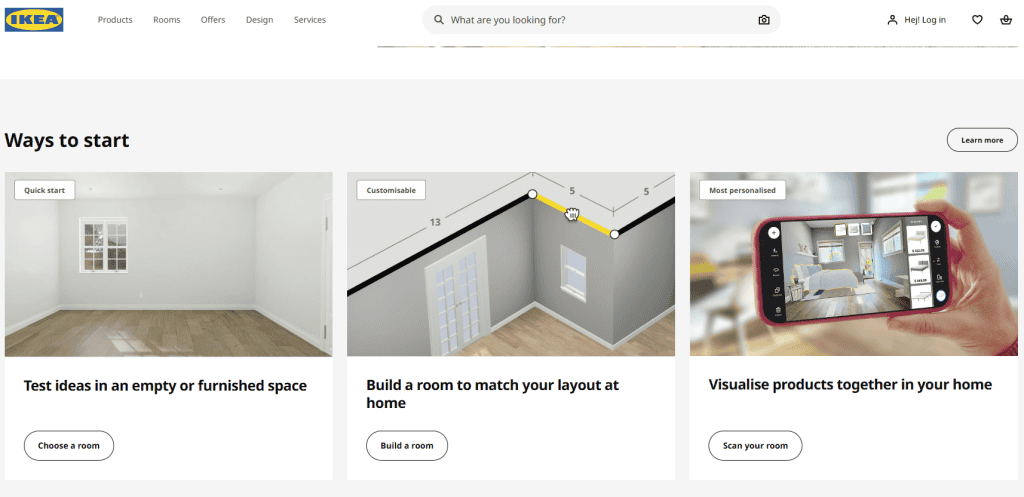
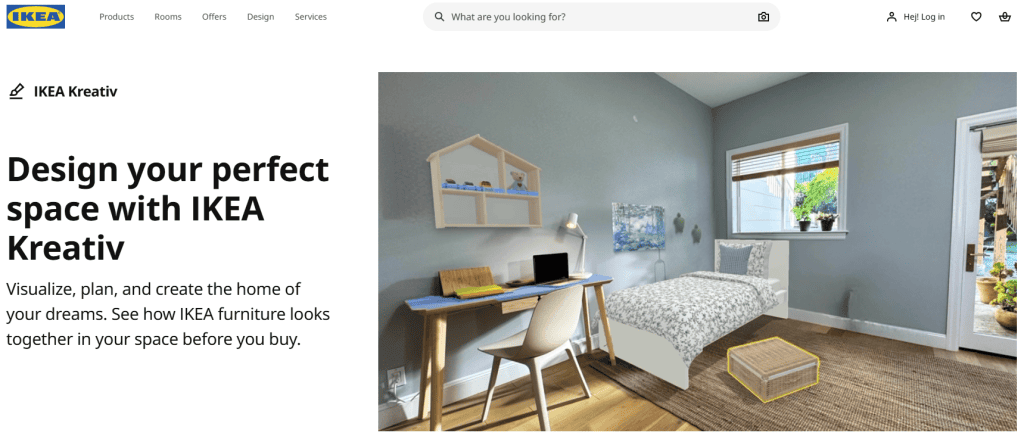
Big retailers and tech platforms have rolled out AR so customers can visualise products at home or try things virtually before buying. This tech is popping up everywhere—from furniture and beauty to fashion and eyewear.
IKEA Place and Furniture Visualisation
IKEA Place is one of the best-known furniture AR apps, built with Apple’s ARKit. The app lets you drop true-to-scale 3D furniture models into your home using your phone camera.
This solves a huge problem: not knowing if furniture will fit or match your décor.
Shopify also has AR features, so smaller retailers can add 3D models and AR to their stores without big budgets.
Other brands, like Amikasa, offer room planning with AR visualisation. Some configurators let you customise sofas or cabinets and see them virtually in your space. These tools help customers make better choices and lower return rates.
Virtual Mirrors for Beauty and Eyewear
Sephora was an early leader in beauty AR with their Virtual Artist tool. You can try on thousands of makeup products through your phone or in-store AR mirrors.
These mirrors use facial recognition to map products onto your face in real time. In-store AR mirrors make it easy to try lots of products quickly, so you can experiment with new looks.
Eyewear brands use virtual fitting tech, too. You can see how different frames look on your face, which is super helpful for online shopping where fit and appearance matter a lot.
AR Innovations in Fashion and Retail
Fashion brands are using AR for virtual clothing try-ons and size checks. At some events, you’ll find AR mirrors where you can try on outfits and accessories, then share pics for feedback.
AR user manuals are also a thing—just point your device at a product for interactive assembly instructions or info. Some retailers use AR glasses in warehouses and stores to boost efficiency, though consumer AR glasses are still pretty rare.
Platforms like BigCommerce now come with built-in AR features. This makes it easier for merchants to add virtual try-on for clothes, accessories, and cosmetics without needing to be tech experts.
Future Trends and Opportunities in AR Ecommerce
AR ecommerce is moving fast, with AI, social media, and new wearables changing how we shop. These advances are opening up new opportunities for both shoppers and businesses.
AI-Driven Personalisation
Artificial intelligence is making AR shopping more personal. Machine learning lets AR interfaces adapt to what you like and how you shop.
AI-powered AR personalisation can adjust virtual try-ons to match your body type or style. If you preview furniture in AR, AI might suggest pieces that fit your room’s vibe.
Visual search is getting smarter, too. Point your phone at something, and AR shows you similar products you can buy. The more you use it, the better the recommendations get.
Social Commerce and AR Shopping
Social media is a huge driver for AR shopping. Instagram and TikTok support AR-driven social commerce with shoppable stories and interactive filters.
Influencers use branded AR filters to demo products live, making content that leads directly to purchases. For example, a beauty influencer can let followers try on virtual makeup and buy the exact shades right in the app.
This setup makes buying easy—discover, try, and purchase all in one place, fast.
Advancements in AR Devices and Wearables
AR is getting more accessible thanks to better mobile tech and new wearables. WebAR lets you use AR straight from your browser—no app needed.
Consumer AR glasses are on the horizon, moving AR beyond phone screens. While VR headsets are big in gaming, lightweight AR glasses could become everyday shopping tools, overlaying info and reviews onto real-world products.
Imagine browsing virtual catalogues hands-free while shopping, or getting instant product comparisons just by looking at items. AR is shifting from novelty to useful shopping companion.
Business Impact and Market Outlook
AR has huge economic potential in ecommerce, with VR and AR expected to add £1.2 trillion to the global economy by 2030.
Retailers using AR are already seeing benefits like lower return rates and happier customers. AR shopping boosts conversion rates because people feel more confident in their choices.
Platforms like Shopify and BigCommerce have built-in AR tools, so even small businesses can offer immersive experiences that used to be exclusive to big brands.
Frequently Asked Questions
AR changes how we shop by letting us interact with products before buying, and it helps retailers cut returns and increase sales. Tools range from virtual try-ons to previewing items in your own space.
How is augmented reality shaping the future of online shopping?
AR lets you see products in your actual environment before you buy. People can place furniture in their living rooms or try on makeup using their phone cameras.
AR ads get 94% more conversions than regular ads, which shows how powerful AR can be for shopping.
It takes the guesswork out of online shopping. When you can see how something fits your space or style, you’re way more likely to buy with confidence.
What benefits does augmented reality bring to consumer engagement in digital marketplaces?
AR turns passive browsing into active exploration. Shoppers can interact with 3D models and test products virtually.
Augmented reality overlays digital elements onto the real world, so customers can see products in their own space before buying. This hands-on experience often leads to memorable moments that people share on social media.
About 40% of buyers say they’d pay more after using AR features. For example, virtual try-ons at Rebecca Minkoff boosted order rates by 65% because customers trust what they see.
AR also helps build brand loyalty in competitive markets. Research shows 61% of shoppers prefer retailers that offer AR experiences.
In what ways are businesses integrating AR into their inventory management systems?
Businesses mainly use AR for customer-facing features instead of backend inventory systems. The main focus is on product visualisation and virtual try-ons for shoppers.
Retailers bring AR to life through mobile apps and web-based tools. IKEA’s Place app, for example, lets you see true-to-scale furniture in your home.
Some physical shops have AR mirrors that overlay clothing or makeup onto shoppers’ reflections. This speeds up the try-on process without needing fitting rooms.
How does AR technology enhance the customer experience in virtual try-on features?
Virtual try-ons help solve the biggest challenge in online shopping—not knowing how products look on you. Customers can see makeup shades, glasses, or clothing on themselves through their phone camera.
L’Oréal found its virtual makeup try-on led to a 27-34% sales lift. Shoppers feel more confident about colour matching and style before they buy.
The tech uses face tracking and 3D modelling to overlay products realistically. Sephora, for example, offers hundreds of makeup shades that customers can test on their own faces.
Virtual try-ons also cut return rates. When shoppers know exactly what they’re getting, they rarely send items back.
Can you explain the differences in application between augmented reality and virtual reality for retail?
AR enhances the real world, while VR replaces it completely. AR is more accessible since it works on smartphones that billions of people already have.
VR needs special headsets and controllers, which can be a barrier for most shoppers. AR lets you preview a sofa in your actual living room, but VR would put you in a fully digital showroom.
Most retailers go with AR so shoppers can stay aware of their surroundings. It makes it easy to compare digital products with your existing furniture and décor.
What strategies do companies employ to seamlessly incorporate AR into their marketing campaigns?
Brands use social media filters on Instagram and Snapchat to launch products and create viral campaigns.
Gucci and Netflix let customers try on items and share experiences, turning shoppers into brand ambassadors.
Some companies add QR codes or markers to packaging. Jack Daniels, for example, places markers on bottles that unlock story-driven AR content when scanned.
Tesco’s app lets customers scan items to unlock gamified AR experiences and product information.
This turns routine shopping into interactive adventures.
Retailers also build dedicated AR apps like IKEA Place or ASOS’s See-My-Fit.
These standalone tools focus entirely on product visualisation and virtual try-ons.
Around 60% of shoppers discover new products on Instagram through AR filters.
This organic reach costs less than traditional advertising and drives higher engagement.