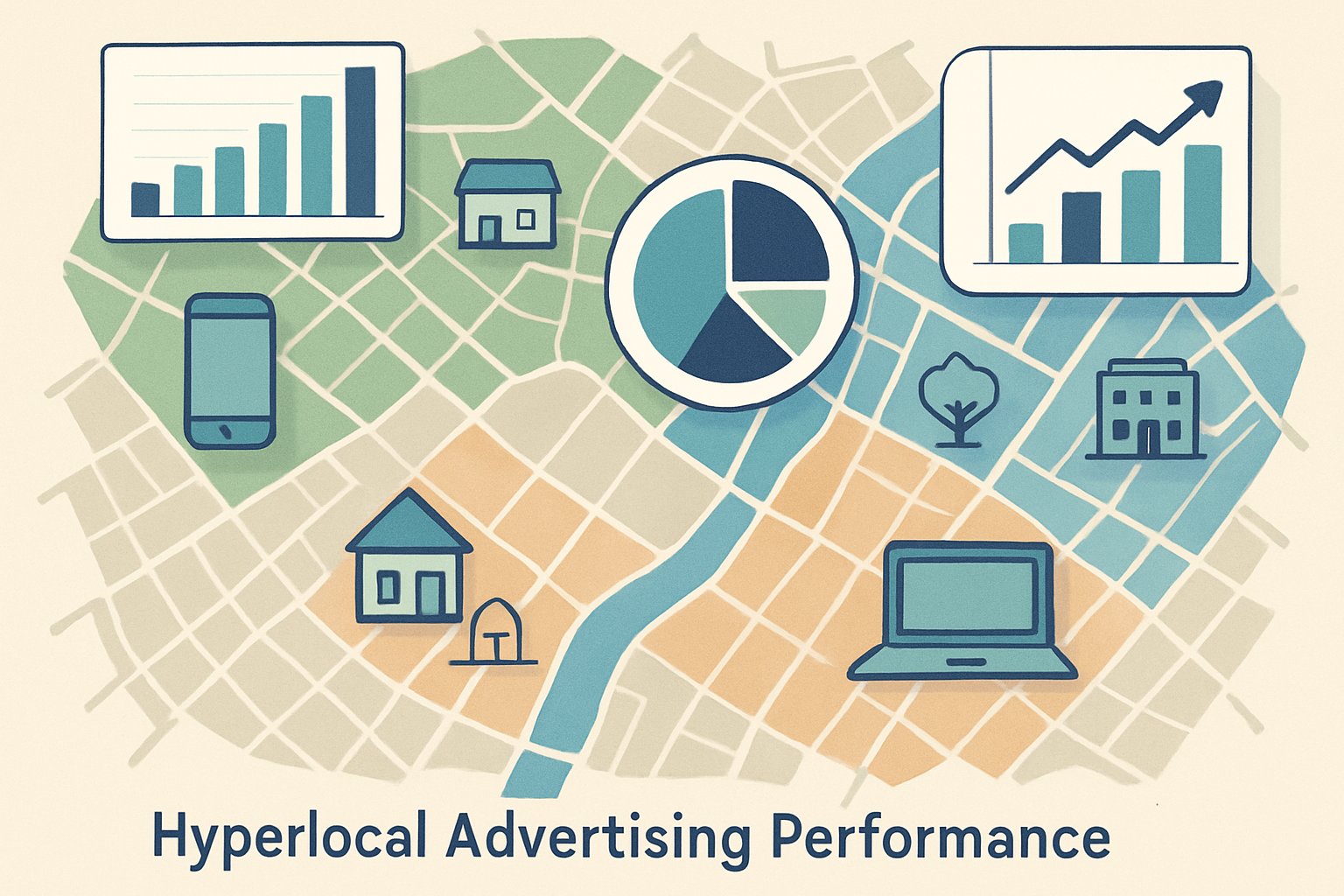
Local businesses succeed when they reach the right customers in their area. Hyperlocal marketing campaigns help companies connect with nearby shoppers through targeted digital ads.
Recent case studies show that businesses using hyperlocal advertising see up to 157% more conversions compared to traditional broad-targeting approaches.
Smart location-based targeting helps franchises grow their customer base in specific neighborhoods. New York Pizza boosted sales across 300 locations by running customized ads for each store’s delivery zone.
Their automated system adjusted promotions based on local events, weather, and customer behavior patterns. We examined successful campaigns from leading brands to identify what works best in hyperlocal advertising.
Fresh local content combined with geographic targeting helps businesses stand out in their communities and attract nearby customers ready to make purchases.
Key Takeaways
- Hyperlocal advertising delivers 157% higher conversion rates than broad targeting approaches
- Location-based targeting with customized local content drives better engagement
- Automated campaign management helps scale hyperlocal strategies across multiple locations
Understanding Hyperlocal Advertising
Location-based marketing lets businesses target customers in specific neighborhoods and areas with pinpoint accuracy. This precise targeting combines digital tools with local knowledge to reach the right people at the right time.
Definition Of Hyperlocal Advertising
Hyperlocal marketing targets customers within a very specific geographic area, often just a few blocks or neighborhoods. It uses location data from mobile devices and digital platforms to deliver targeted ads.
Key Components:
- GPS and geofencing technology
- Mobile device targeting
- Local search optimization
- Neighborhood-level demographic data
This targeted approach helps businesses reach customers when they are physically near a store or business location. The ads can promote specific products, deals, or events relevant to that exact location.
Difference Between Hyperlocal And Traditional Marketing
Traditional marketing casts a wide net across large areas like cities or regions. Hyperlocal strategies focus on much smaller zones.
Traditional Marketing:
- Broad geographic coverage
- General messaging
- Mass media channels
- Limited targeting options
Hyperlocal Marketing:
- Specific neighborhoods
- Personalized messages
- Mobile and digital channels
- Precise audience targeting
Key Elements Of Hyperlocal Strategies
Location-based advertising relies on several crucial components to succeed.
Essential Tools:
- Geofencing technology
- Mobile device tracking
- Local demographic data
- Real-time analytics
We use these tools to create targeted campaigns that connect with local customers. Digital platforms help track customer movement patterns and preferences.
Local content and offers must match neighborhood demographics and preferences. This includes adapting messages for different areas based on income levels, age groups, and shopping habits.
Real-time data helps adjust campaigns quickly based on performance metrics and customer response.
Why Hyperlocal Ad Performance Matters

Local advertising brings measurable benefits through precise targeting and community connections. Focused local campaigns generate higher returns while building lasting customer relationships in specific geographic areas.
Benefits For Local Businesses
Small businesses gain a competitive edge by targeting high-intent customers in their immediate area. This targeted approach helps build brand recognition within specific neighborhoods.
Local businesses can participate in community events and create genuine connections with nearby customers. These relationships lead to repeat business and word-of-mouth referrals.
Key advantages include:
- Reduced ad waste by targeting only relevant local audiences
- Higher visibility among nearby potential customers
- Stronger community presence and reputation
- Better customer retention through local relevance
Impact On ROI And ROAS
Hyperlocal advertising increases efficiency by focusing marketing spend on the most likely customers. This targeted approach typically yields better conversion rates than broad campaigns.
We see businesses achieve better returns because:
- Ads reach customers who can easily visit physical locations
- Marketing budgets focus on high-potential local areas
- Campaign messaging resonates with specific local needs
- Geographic targeting reduces wasted ad impressions
Enhanced Consumer Engagement
Local-focused strategies transform advertising from broad messaging into meaningful customer connections. Personalized local content creates stronger emotional bonds with nearby consumers.
Engagement improves when businesses:
- Create location-specific offers and promotions
- Address neighborhood-specific needs and preferences
- Respond quickly to local customer feedback
- Maintain active presence at community events
Local customers appreciate seeing familiar landmarks and references in ads. This recognition builds trust and encourages long-term loyalty.
Key Metrics For Evaluating Hyperlocal Ad Success
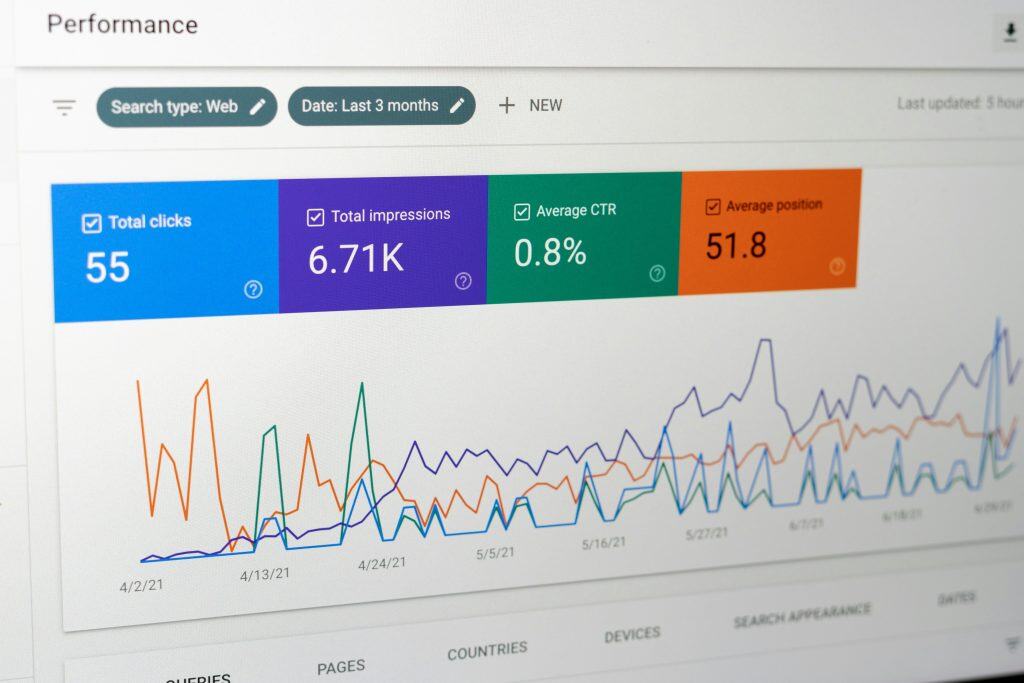
Measuring hyperlocal advertising success requires tracking specific performance indicators that show real business impact. These metrics help prove ROI and optimize campaigns for better results.
Tracking Foot Traffic And In-Store Visits
Foot traffic monitoring gives us direct insight into how ads drive physical store visits. We can measure this through mobile location data, store sensors, or check-in systems.
GPS-enabled beacons help track customer movement patterns and dwell time in different store areas. This reveals which ads successfully brought people inside.
We can compare foot traffic during and after ad campaigns to establish clear cause-and-effect relationships. Tracking peak visit times and popular store sections helps optimize both ad timing and messaging.
Conversion Rates And CTR
Click-through rates (CTR) tell us if our ads catch attention, while conversion rates show if they drive desired actions. We track these through digital analytics platforms.
Typical hyperlocal ad CTRs range from 1-3% for display ads and 3-5% for search ads. Higher rates often indicate strong local relevance.
A/B testing different ad versions helps improve performance. We analyze which headlines, images, and calls-to-action resonate best with local audiences.
Assessing Ad Spend Efficiency
Cost per acquisition (CPA) and return on ad spend (ROAS) reveal campaign profitability. We track total spend against revenue generated.
Breaking down costs by:
- Ad platform
- Geographic area
- Time of day
- Device type
- Creative format
This granular analysis shows which campaign elements deliver the best ROI.
Measuring Customer Reviews And Feedback
Local customer sentiment provides qualitative insight into ad effectiveness. We monitor review sites, social media mentions, and direct feedback.
Key review metrics include:
- Star ratings
- Review volume
- Response rates
- Sentiment trends
- Common themes
Comparing review data before and during campaigns helps measure brand perception impact. Quick responses to feedback show engagement with the local community.
Case Studies In Hyperlocal Ad Performance
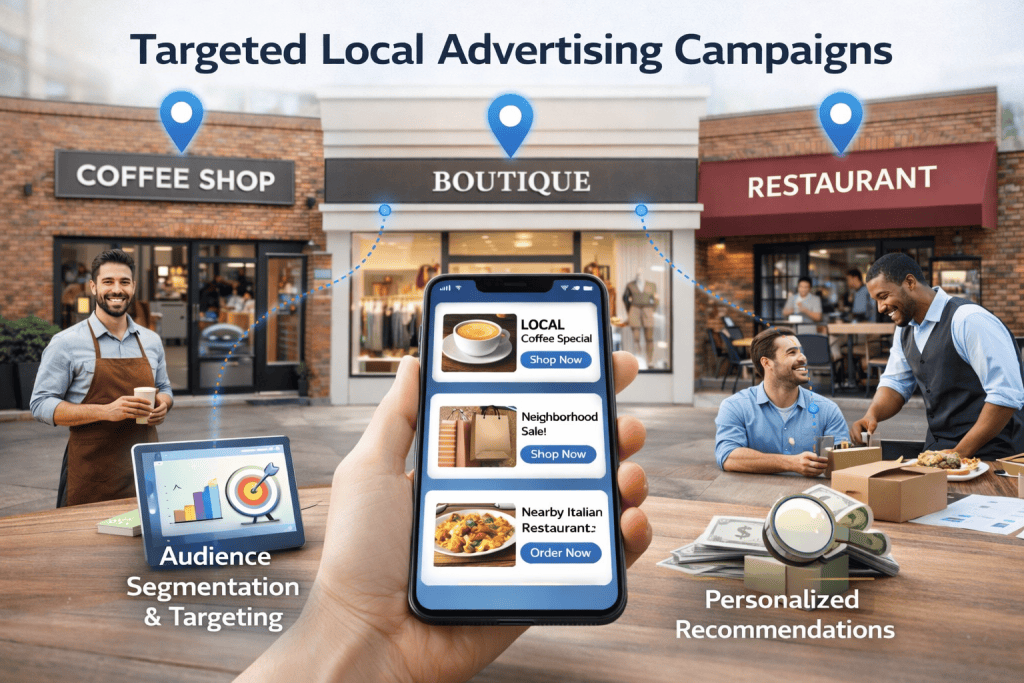
Real-world examples demonstrate the power of precisely targeted local advertising campaigns to drive measurable business results. Leading brands have achieved significant success through hyperlocal strategies that connect with nearby customers.
Local Retail Success Stories
Kalyan Jewellers boosted sales significantly by targeting ads to specific neighborhoods where their stores operate. Their campaign used location data to identify potential customers within a 3-mile radius.
Local retailers saw a 40% increase in foot traffic by implementing geo-targeted promotions during peak shopping hours. They used:
- Mobile push notifications
- Location-specific deals
- Personalized offers based on proximity
Small businesses achieved better results by focusing ad spend on their immediate trade area rather than broader geographic targeting.
Food Delivery Campaign Impact
New hyperlocal advertising tools helped restaurants increase delivery orders by 65% through targeted messaging to specific neighborhoods.
Delivery platforms improved conversion rates by showing estimated delivery times based on customer location. Key metrics included:
- 8-minute average delivery time reduction
- 32% higher order values
- 45% increase in repeat customers
Dynamic pricing strategies based on distance and demand helped optimize delivery radius and profitability.
Community Events And Engagement
Local event promoters increased attendance by 85% using geofenced social media ads targeted to residents within walking distance.
Community organizations improved participation through:
- Neighborhood-specific event calendars
- Local influencer partnerships
- Targeted social media ads
Real-time engagement tracking showed 3x higher response rates for hyperlocal ads versus broader geographic targeting.
Geofencing In Urban Areas
Digital advertising strategies in dense urban areas achieved 74% better performance through precise geofencing techniques.
Successful urban campaigns utilized:
- Building-specific targeting
- Transit stop proximity
- Competitive location targeting
Mobile apps saw 2.8x higher engagement rates when sending notifications to users within 100 meters of relevant locations.
Retail chains used polygon geofencing to avoid ad overlap between nearby locations, reducing wasted ad spend by 45%.
Tactics For Effective Hyperlocal Campaigns
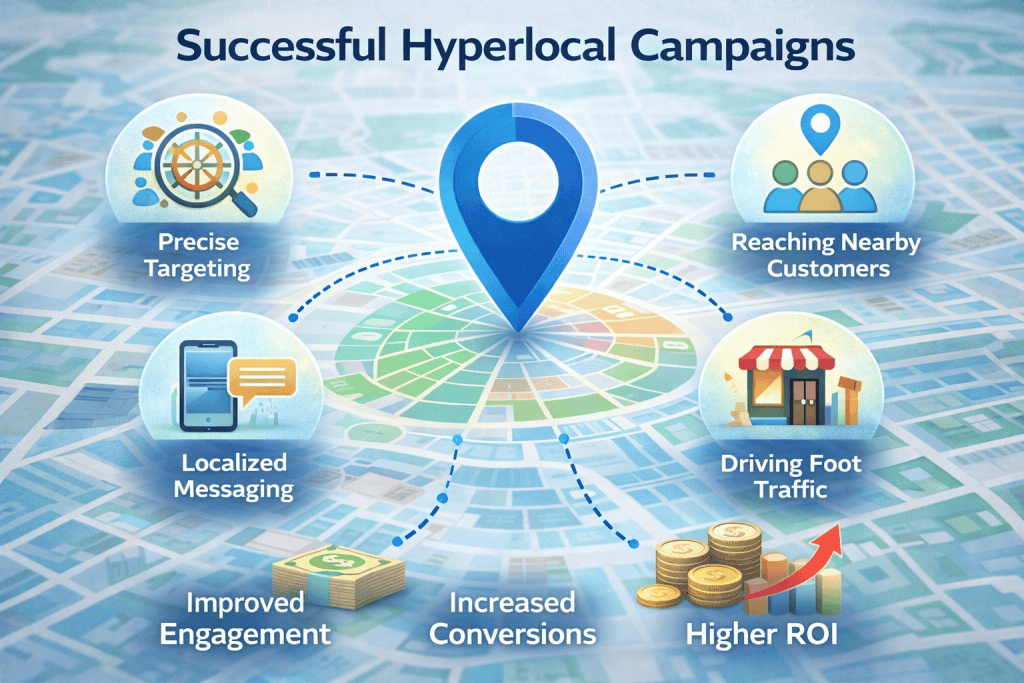
Successful hyperlocal campaigns rely on precise targeting, relevant messaging, and compelling local offers that resonate with nearby customers. We’ve found these tactics consistently deliver strong engagement and conversions.
Utilizing Location Data
Mobile device data helps us pinpoint exactly where potential customers are located and how they move through neighborhoods. We use GPS coordinates and cell tower data to create accurate geographic targeting zones.
Real-time location tracking allows us to send notifications when customers enter specific areas. For example, a café can trigger a special offer when someone walks within 500 feet of their store.
We combine location information with demographic details to build detailed customer profiles. This helps identify high-value areas where our target audience frequently visits.
Personalized Messaging and Content
Creating location-specific content that references local landmarks, events, and community interests drives higher engagement rates.
Key personalization tactics:
- Mentioning neighborhood names
- Referencing local sports teams
- Including area-specific cultural elements
- Using regional terminology
We tailor message timing based on local routines and behaviors. Messages sent during peak commute times near transit hubs often see better response rates.
Leveraging Localized Promotions
Targeted local offers generate 3-5x higher conversion rates compared to generic promotions. We design special deals for specific neighborhoods or zones.
Effective promotion types:
- Time-sensitive flash sales
- Location-exclusive discounts
- Neighborhood loyalty programs
- Local event tie-ins
Mobile push notifications about nearby deals show particularly strong results. We’ve found that offers valid within a 1-mile radius create urgency and drive immediate action.
Platforms And Tools For Hyperlocal Advertising
Modern hyperlocal advertising platforms give businesses precise targeting capabilities to reach customers in specific geographic areas. Digital tools make it easier than ever to connect with local audiences through targeted ads and optimized local presence.
Google Ads And Google My Business
Google Ads targeting features let us set specific radius targeting around business locations and target searches with local intent. We can show ads only to people within a few blocks or miles of our stores.
Google My Business profiles are essential for local visibility. By optimizing our GMB listing with accurate business info, photos, and posts, we improve our chances of appearing in local pack results.
Key GMB optimization tips:
- Verify and claim your listing
- Keep hours and contact info updated
- Add high-quality photos monthly
- Respond to all customer reviews
- Post regular updates about offers and events
Facebook Ads And Nextdoor
Facebook’s ad platform provides detailed location targeting options. We can target specific neighborhoods, zip codes, or create custom geographic zones around our locations.
Social media targeting tools let us reach local audiences with precision. Nextdoor’s platform connects us directly with nearby residents through both organic posts and paid promotions.
Best practices for local social ads:
- Use location-specific creative and copy
- Target recent visitors to your area
- Test different radius sizes around stores
- Include store-specific offers and promos
Harnessing Google Maps And Local Search
Local SEO optimization helps our business appear in Google Maps results when nearby customers search. We need accurate business data across all local citations and directories.
Google Maps ads can display our locations prominently when people search in our area. Map pins and local search ads increase visibility to people actively looking for businesses like ours.
Key local search factors:
- Consistent NAP (Name, Address, Phone) across sites
- Location-specific web pages
- Local keyword optimization
- Mobile-friendly design
- Location schema markup
Challenges And Opportunities In Hyperlocal Campaigns
Location-based advertising creates unique technical hurdles while offering powerful ways to reach local customers. Success requires careful attention to data quality, measurement methods, and systematic expansion approaches.
Privacy And Data Accuracy
Location data accuracy remains a critical concern for hyperlocal campaigns. GPS signals can be imprecise in dense urban areas, leading to targeting errors.
We must balance personalization with strict privacy regulations like GDPR and CCPA. Many users now opt out of location sharing, reducing available targeting data.
Key Data Quality Factors:
- Signal strength validation
- Multiple location confirmations
- Regular data cleansing
- Consent management
- Third-party data verification
Tracking And Attribution
Digital measurement of hyperlocal campaigns requires sophisticated tracking systems. We need to connect online ads to in-store visits and purchases.
Mobile device IDs and GPS coordinates help establish clear paths between ad exposure and physical store visits. Automation tools can process this data in real-time.
Attribution Methods:
- Store visit tracking
- Purchase matching
- Foot traffic analysis
- Cross-device mapping
- Offline conversion tracking
Scaling Hyperlocal Strategies
Expanding local success to new areas demands careful planning and automation. Each market has unique characteristics that affect campaign performance.
We use machine learning to adapt messaging and targeting parameters for different locations. This helps maintain personalization while growing campaign reach.
Scale-up Elements:
- Template creation
- Local market research
- Automated bidding
- Creative customization
- Performance monitoring
Automated systems help manage campaigns across multiple locations while maintaining targeting precision.
Future Trends In Hyperlocal Advertising
Digital technology and changing consumer habits shape the way local businesses connect with nearby customers. Brands now use smart targeting and personalized messages to reach people at the right time and place.
AI And Automation
AI tools make hyperlocal marketing strategies more powerful and efficient. Smart algorithms analyze local data to predict when and where customers are most likely to make purchases.
Automated systems now handle tasks like bid adjustments and ad scheduling. This lets businesses focus on creating better content while machines optimize delivery.
Machine learning helps identify patterns in local customer behavior. We see improved targeting accuracy when AI systems process data about weather, local events, and foot traffic.
Evolving Consumer Behavior
Mobile devices dominate local search and discovery. Local businesses adapt their campaigns to reach customers through maps, apps, and location-based services.
People expect instant, relevant information about nearby businesses. Search queries now include terms like “near me” and specific neighborhood names.
Privacy concerns influence how customers share location data. Businesses must balance personalization with respect for customer privacy preferences.
Innovations In Ad Personalization
Advanced targeting techniques let us show different ads to different people in the same area. Factors like purchase history and browsing behavior help create custom messages.
Dynamic ads change based on local conditions. A coffee shop might promote hot drinks on cold days and iced beverages during warm weather.
Real-time offers catch customers at key moments. When someone walks near a store, they might receive a relevant discount or product suggestion.
Location data helps measure ad effectiveness. We track store visits and sales to optimize campaigns for better results.
Frequently Asked Questions
The most impactful hyperlocal advertising campaigns rely on precise metrics, strategic mobile targeting, and industry-specific customization. The data shows measurable results when brands match their hyperlocal ads to consumer behavior patterns.
What metrics are crucial for measuring the success of hyperlocal advertising campaigns?
Engagement rates and foot traffic serve as primary success indicators for hyperlocal campaigns.
Click-through rates and conversion tracking help measure immediate consumer response to ads.
Store visit data and sales lift metrics demonstrate real-world impact of hyperlocal targeting.
How do case studies illustrate the impact of ad targeting on local consumer behavior?
Recent data shows local search activity has grown 200%, indicating strong consumer preference for nearby businesses.
Consumer response rates increase when ads match specific neighborhood demographics and behaviors.
Can you provide examples of brands that have successfully leveraged hyperlocal ads to boost performance?
Top brands achieve success by customizing promotions for specific neighborhoods and communities.
Local restaurants and retailers see 30-40% higher engagement when targeting ads within a 1-mile radius.
What role does mobile technology play in the effectiveness of hyperlocal ad campaigns?
Location-based mobile advertising enables real-time targeting of consumers near business locations.
Mobile apps and GPS data help deliver relevant ads to consumers actively searching in the area.
What key challenges businesses face when executing hyperlocal advertising strategies?
Accurate location data collection and privacy compliance create technical hurdles for many businesses.
Budget allocation across multiple micro-markets requires careful planning and optimization.
How do hyperlocal ad performances vary across different industries?
Retail and dining establishments see immediate foot traffic impact from hyperlocal campaigns.
Service businesses benefit from targeted awareness in their core service areas.
Healthcare providers achieve better results by focusing ads within specific neighborhoods and demographics.