CRO keywords aren’t just about driving traffic—they bring in visitors who are actually ready to buy or take action. Unlike traditional SEO keywords that chase rankings and big numbers, CRO keywords connect what people are searching for with content that converts. They bridge the gap between just being seen and actually making money.

A lot of businesses get tons of visitors but see barely any sales because they go after the wrong keywords. Sure, they rank for popular searches, but those visitors don’t really want what’s on offer.
This mismatch between search intent and what actually drives conversions can quietly drain thousands in lost sales.
When you figure out how to spot, research, and use CRO keywords, your website starts pulling in people who genuinely want to buy. It’s all about digging into user behaviour, measuring which keywords actually work, and steering clear of mistakes that kill both your rankings and sales.
Mixing SEO and CRO strategies gives you the best of both worlds—visibility and more revenue from every visitor.
Understanding CRO Keywords
CRO keywords bring people to your website who are ready to do something—buy, sign up, whatever your goal is. Instead of just chasing numbers, these keywords go after users at every stage of the buying journey.
Definition of CRO Keywords
CRO keywords are all about finding those search terms that attract folks who are likely to convert. Traditional SEO usually aims for big traffic numbers, but CRO keywords focus on visitors who will actually take action.
You’ll often see commercial intent phrases like “buy now,” “best price,” or “discount” in CRO keywords. They also cover problem-solving queries from users who need quick answers.
Conversion rate optimisation keywords work by matching what people want with how they behave on your site. They help you figure out what pushes visitors to finally convert.
Some common CRO keyword types:
- Transactional keywords (buy, purchase, order)
- Comparison keywords (vs, best, review)
- Local intent keywords (near me, local)
- Urgency-driven keywords (today, now, fast)
To pick the right ones, marketers dig into user data and follow the paths that lead to actual conversions. They care more about which terms bring sales than which ones get the most clicks.
Importance in Conversion Optimisation
CRO keywords make a real difference to your revenue because they bring in visitors who are ready to buy. They let you focus your marketing on people who are already close to converting.
When you use the right keywords, you’ll see revenue per visitor go up. CRO and SEO data together give you a clearer picture of your audience and help you make smarter decisions.
These keywords reveal user intent patterns. Someone searching “best running shoes under £100” is not looking for the same thing as someone searching “running shoe history.”
CRO keywords also help you spend less on getting new customers by improving your conversion rates. More sales from the same traffic means you get more value from your marketing spend.
They let you create personalised experiences for users. When you know what people want, you can show them content, offers, and calls-to-action that really fit.
Behavioural heatmapping tied to keyword clusters gives you a peek at how visitors with different search intents behave. That helps you tweak your site for better results.
Difference Between SEO and CRO Keywords
SEO keywords mostly chase rankings and traffic numbers. CRO keywords care more about who’s likely to convert.
| SEO Keywords | CRO Keywords |
|---|---|
| High search volume | High conversion intent |
| Broad topics | Specific commercial terms |
| Rankings focus | Revenue focus |
| Traffic quantity | Traffic quality |
SEO usually means optimising content and getting backlinks. CRO keywords focus more on conversion rates and user engagement.
For example, SEO keywords might target “running shoes” with thousands of searches a month. CRO keywords go after “buy Nike running shoes size 9″—lower search volume, but way higher intent to purchase.
You measure them differently too. SEO tracks rankings and organic growth. CRO looks at conversion rates and click-through rates for specific keyword groups.
SEO brings people in, CRO turns them into customers. Honestly, you get the best results when you use both together.
Identifying High-Impact CRO Keywords
Finding keywords that boost your conversions means you need to understand how your audience searches and match keywords to the right spots in the customer journey. The best way to do this? Mix intent analysis with smart keyword placement at each conversion point.
Audience and Intent Analysis
If you want to know which keywords convert, you’ve got to understand what makes your audience tick. Words like “buy,” “compare,” and “best” usually mean someone’s close to making a decision.
Start by checking which search terms already bring in converting visitors. Patterns here show you the language your best customers use.
People search with different goals in mind:
- Navigational: Looking for a specific brand or site
- Informational: Researching or learning about something
- Commercial: Comparing options before buying
- Transactional: Ready to buy or act
For CRO, you want to zero in on commercial and transactional keywords. Those searchers are almost ready to pull the trigger. Modifiers like “review,” “discount,” “free trial,” or “vs” are good signs of commercial intent.
Look at both search volume and conversion potential. Sometimes the big numbers don’t convert well. Smaller, more targeted keywords with clear buying intent often do way better.
Keyword Types for Conversion
Different keywords do different jobs for conversions. Long-tail keywords usually win because they’re more specific and show clear intent.
Product-focused keywords are great for e-commerce. These might include exact product names, model numbers, or features. Someone searching “wireless noise-cancelling headphones under £200” is probably ready to buy.
Solution-based keywords help users who want to fix a problem. Phrases like “how to fix,” “best way to,” or “solution for” work well for service businesses.
Comparison keywords grab users who are weighing options. Stuff like “A vs B” or “alternatives to” means they’re close to a decision. Knowing the difference between CRO and SEO helps you pick the right ones.
Local keywords add a place name for businesses that serve specific areas. “Plumber near me” or “Manchester digital agency” target users who want to buy locally.
Aligning Keywords with the Funnel
You need different keywords for each stage of the funnel. Top-of-funnel keywords build awareness, while bottom-of-funnel terms drive the final conversion.
Awareness stage keywords are broad and help people learn. They’re not ready to buy yet, but you can prep them for later.
Consideration stage keywords show users are checking out their options. Focus on comparisons and detailed features here.
Decision stage keywords mean someone’s ready to take action. Words like pricing, free trial, or “contact us” are key. Aligning SEO with CRO goals makes sure your keywords work for both traffic and conversions.
Match keywords to the right pages. Use decision-stage keywords on landing pages and awareness keywords in blog posts.
Track which keywords in each funnel stage actually drive conversions. Sometimes, those early-stage keywords surprise you and bring in buyers if your content guides them the right way.
Research Methods for CRO Keywords
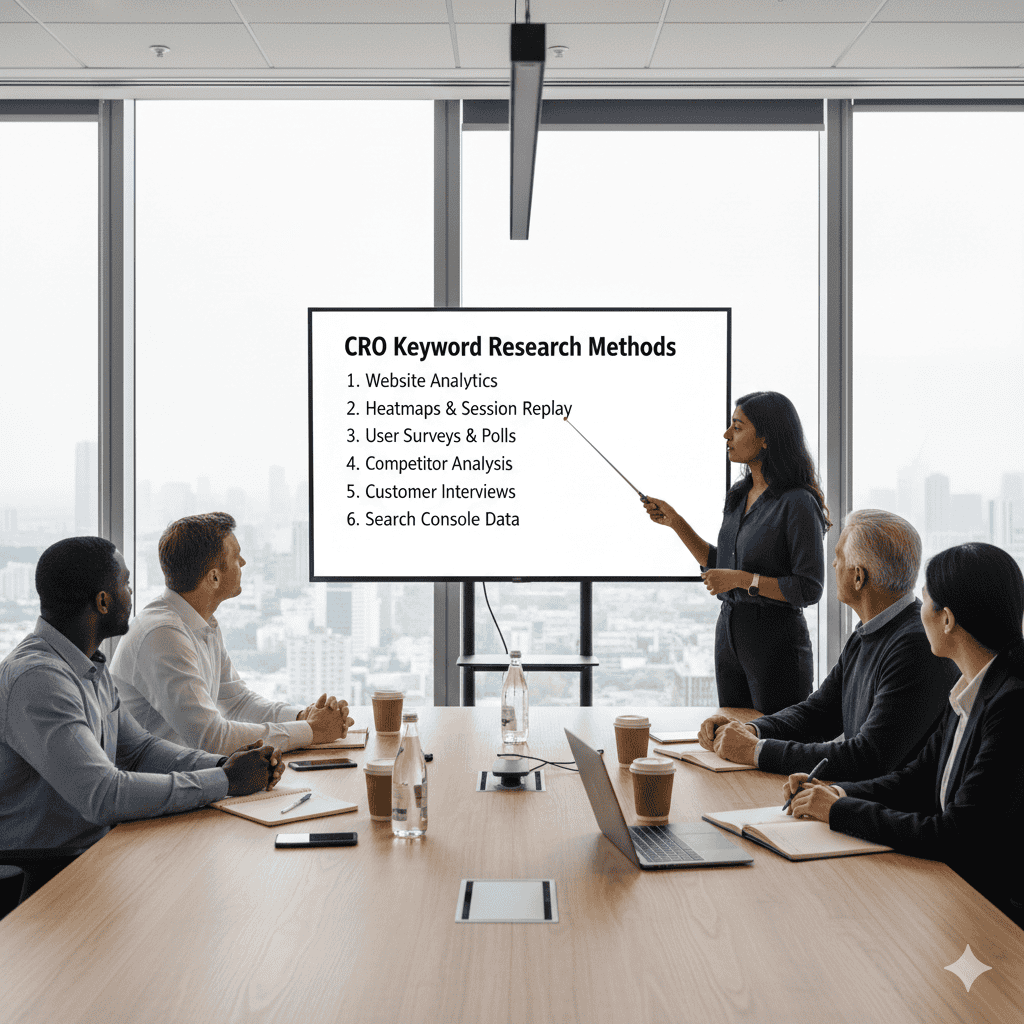
If you want to get serious with CRO keyword research, you’ve got to pull in data from everywhere and keep an eye on your competitors. Conversion tracking tools give you the numbers you need to tweak and improve your campaigns.
Analysing Existing Data Sources
Your analytics platform is packed with keyword data that most folks just ignore. Google Analytics 4 shows which keywords bring in the most conversions and keep people on your site.
Search Console lays out the exact queries users typed before landing on your site. This helps you spot high-intent keywords that others might overlook.
If you filter for click-through rates above 5%, you’ll usually find some gold.
Heat mapping tools like Hotjar let you see how visitors interact with your pages. When you match this with keyword data, you quickly spot which search terms bring in the most engaged visitors.
Customer service logs are another hidden gem. The way customers describe their problems often gives you unique long-tail keywords.
Email marketing stats can show which subject lines get the most opens. Those phrases can double as killer CRO keywords for landing pages.
Competitor Keyword Insights
SEMrush and Ahrefs make it easy to see which keywords send traffic to your competitors. Sort by estimated conversion value to see where your rivals are making their money.
Check out competitor landing pages. If you spot pages with lots of conversion forms, they’re probably targeting their best keywords.
Social media listening tools let you track which competitor posts get the most love. Those keywords are worth testing in your own CRO campaigns.
PPC analysis shows which keywords your competitors spend the most on. If they’re bidding high, those terms are probably bringing in sales.
Advanced keyword research techniques include looking at competitor backlinks. The anchor text often reveals what terms others connect with successful businesses.
Using Conversion Tracking Tools
Google Ads Conversion Tracking links keywords straight to sales or leads. Enhanced conversions give you even better data on what’s working.
Call tracking tools like CallRail assign different phone numbers to different keyword campaigns. You’ll see which search terms get people to pick up the phone.
A/B testing platforms let you see which keywords work best with different landing pages. This helps you optimise both who comes in and what they do once they’re there.
CRMs track the whole customer journey, from first search to final purchase. You can spot which keywords bring in the best, most loyal customers.
Conversion funnel analysis shows where people drop off. If a keyword brings in traffic but not conversions, maybe it needs a new landing page or message.
Implementing CRO Keywords on Your Website
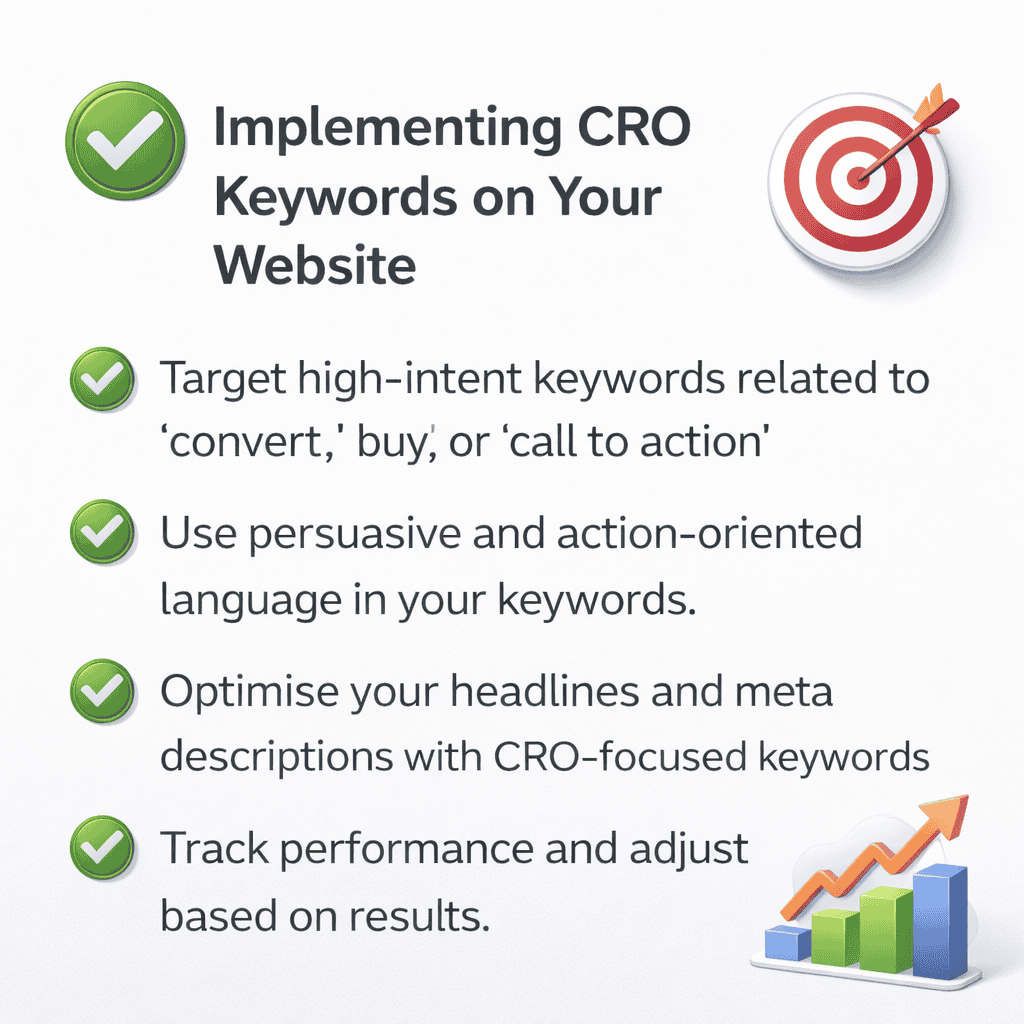
Where and how you use your keywords can make or break your conversion rates. You want to line up your messaging with what visitors are searching for, right from the start.
Landing Page Optimisation
Optimising your landing pages starts with matching your headline to the visitor’s intent. Drop your main CRO keyword into the first 10 words so people know they’re in the right place.
Stick your keywords here:
- Titles and meta descriptions
- Main headlines (H1 tags)
- Subheadings
- Call-to-action buttons
- Image alt text
On product pages, long-tail keywords that address buyer worries work best. Phrases like “best price guarantee” or “free next-day delivery” help nudge people closer to buying.
Mixing CRO with SEO and smart keyword use can totally transform your results. Just keep keyword density around 1-2% and make sure it all reads naturally.
For forms, use action-oriented keywords. Skip the boring “Submit” and go for buttons like “Get My Free Quote” or “Start My Trial Today.”
Ad Copy Enhancement
Enhancing ad copy really comes down to matching the right keywords with what people are actually searching for. If you want better click-through rates and more conversions, you’ve got to get those primary keywords into your headlines. Stick your secondary keywords in the descriptions to back things up.
Here’s a basic structure that works for most ads:
- Headline 1: Primary keyword plus a benefit
- Headline 2: Secondary keyword with a bit of urgency
- Description: Supporting keywords and a call-to-action
Dynamic keyword insertion makes your ad content line up with what people are searching for, so your relevance scores go up. But honestly, if you don’t keep an eye on it, you’ll end up with weird phrasing or mismatched results.
Negative keywords keep your ads from showing up for stuff you don’t want, so you don’t waste money. For premium products, you’ll want to block words like “free,” “cheap,” or “DIY.”
Try out different keyword combos to see what actually brings in the right people. A/B testing your headlines with keywords in different spots can make a surprising difference, depending on your industry.
Content Personalisation
Content personalisation is all about using what you know about your visitors and their searches to serve up messages that actually matter to them. The content changes depending on where people come from, what they’ve done before, or even their device.
Some ways to personalise:
- Add location-based keywords
- Use industry lingo
- Pull in past search history
- Tweak messages for mobile vs desktop
When someone comes back to your site, show them something different. If they’ve already checked out your pricing, maybe give them testimonials or case studies. First-timers? Hit them with product benefits and features.
If you’re picking keywords for CRO, think about where people are in their journey. Early on, folks want to learn, so educational keywords work. Closer to the end, action words get more conversions.
Personalised subject lines in emails, using keywords from what people browsed, can boost open rates by 26%. That’s way better than boring, generic emails.
Chatbots can drop in visitor keywords to make conversations feel more relevant, nudging people closer to taking action.
Measuring CRO Keyword Effectiveness
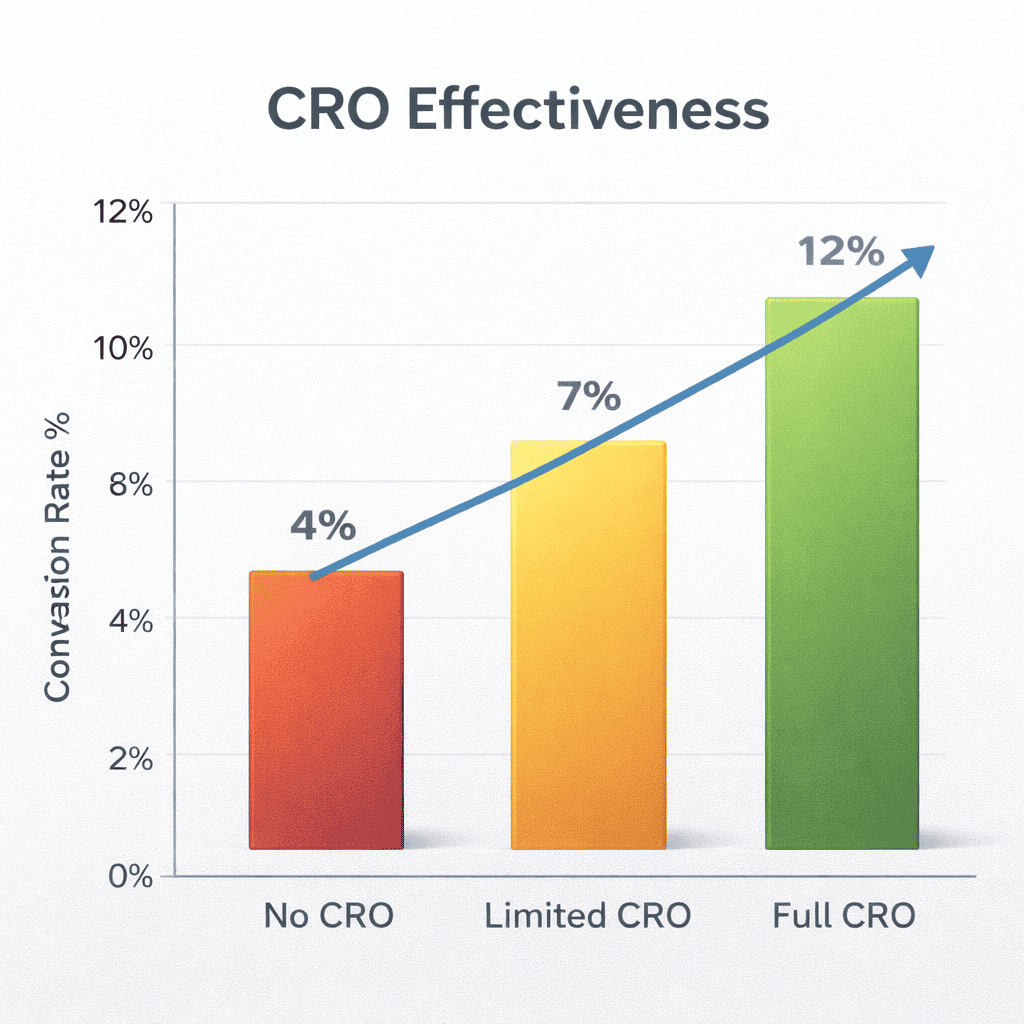
If you want to know which keywords actually work, you’ll need to track a few key metrics. Focus on conversion rates, test out different keywords, and keep tweaking things as you go.
Key Performance Indicators
CRO metrics give you the real story about how your keywords perform at every step. The main indicators show which search terms actually drive results.
Conversion Rate by Keyword tells you what percentage of visitors take action after coming in from certain search terms. It’s the best way to spot which keywords bring in people who actually want to buy, not just click.
Cost Per Conversion is just your total spend divided by the number of conversions for each keyword. If you see a low cost per conversion, you’re probably hitting the right audience.
Revenue Per Visitor (RPV) shows the average money you make from visitors who came in via each keyword. If a keyword brings in high-value shoppers, it might be worth bidding more on it.
Other handy metrics:
- Click-through rates
- Time spent on landing pages
- Bounce rates by keyword
- Multi-channel conversion paths
A/B Testing with Keywords
Try out different keyword strategies to see what really moves the needle. Split testing lets you run controlled experiments and compare which keywords perform best.
With Landing Page Alignment, you can build different versions of your page for specific keyword groups. Maybe one page targets “buy running shoes” and another goes after “best marathon trainers.” See which one gets more conversions.
Ad Copy Variations are worth testing too. For example, put “Free Shipping on Trainers” against “Premium Running Shoes Delivered” and see which headline grabs more attention.
Keyword Match Types in paid ads let you test broad, phrase, and exact matches. Exact match usually converts better, but you might get less traffic than with broad match.
Let your tests run for at least two weeks, just to cover all the ups and downs of weekly traffic and any seasonal blips.
Iterative Optimisation Processes
Continuous CRO measurement means you’re always making small tweaks. Regular reviews and updates help you keep improving.
Check keyword metrics every week to spot trends or problems. If a keyword’s conversion rate drops, maybe it’s time to update your landing page or adjust your bids.
Add negative keywords to cut out searches that don’t convert. Dig into your search query reports to find those useless terms that eat up your budget.
Tweak your keywords depending on the season. Some keywords blow up during the holidays but tank at other times.
Keep an eye on competitors, too. Tools like SEMrush and Ahrefs show you what keywords others are using and where there might be new opportunities.
Every month, jot down what you changed, what worked, and what you want to try next.
Common Mistakes with CRO Keywords
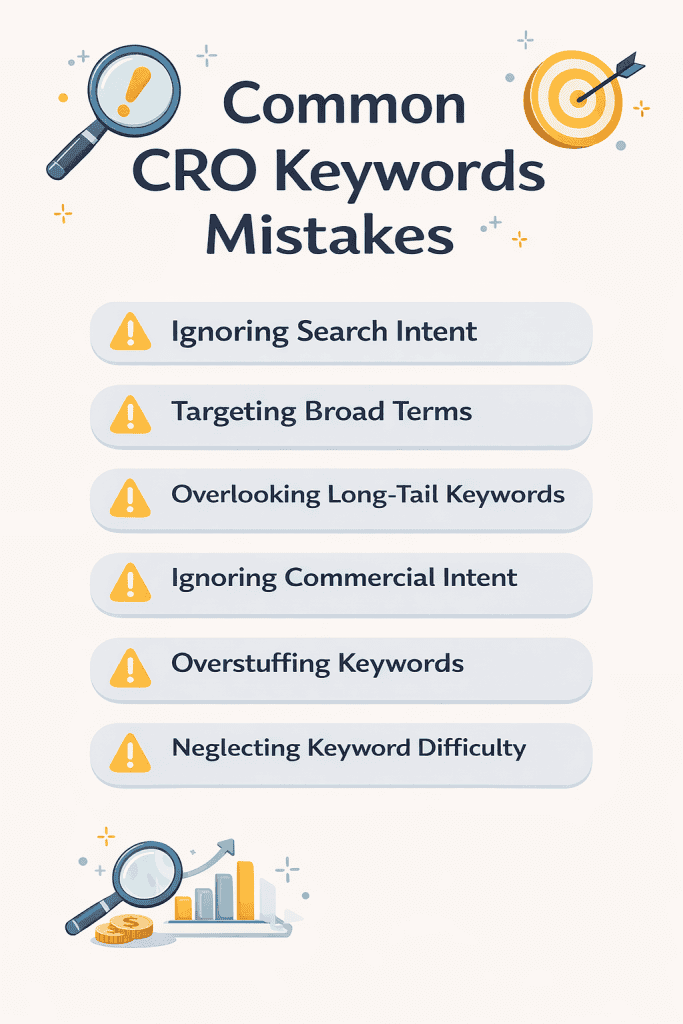
Lots of businesses mess up CRO keyword strategies because they misunderstand what users actually want or don’t dig into the data. Usually, the big mistakes come from guessing at user intent, skipping the numbers, or aiming at the wrong conversions.
Overlooking User Intent
Getting user intent right is the heart of CRO keyword strategy. Common CRO mistakes often happen when businesses assume they know what customers want without checking.
If someone searches “best running shoes,” they’re probably researching. “Buy Nike Air Max size 9” is a whole different ballgame—they’re ready to purchase. Purchase-ready intent is way more valuable at that stage.
Research-phase keywords are usually things like:
- “Best [product]”
- “How to [action]”
- “[Product] reviews”
- “Compare [product A] vs [product B]”
Purchase-ready keywords look more like:
- Brand names
- Model numbers
- “Buy” or “purchase”
- Location details
Using the same conversion strategy for both types doesn’t work. People researching need helpful info and maybe a nudge to sign up for emails. Shoppers who are ready to buy just want a quick checkout and to know the product’s in stock.
Match your landing page content to the keyword intent. If you don’t, you’ll waste traffic and annoy users who can’t find what they’re after.
Neglecting Data Analysis
CRO mistakes that affect SEO often boil down to not looking at the data the right way or not tracking what matters. Collecting data is one thing, but actually analysing it for keyword insights is what counts.
You need to track more than just conversion rates. Bounce rate tells you if your keywords are bringing in the right people. Time on page shows if visitors are engaged. Pages per session gives you an idea of how deep people go.
If a keyword brings in lots of traffic but nobody buys, there’s a mismatch. On the flip side, some keywords don’t get much traffic but convert like crazy—those are gold.
Track these, too:
- Conversion rate by keyword
- Revenue per visitor by source
- Assisted conversions
- Micro-conversions
Don’t forget to segment your keyword data. Mobile and desktop can perform totally differently. Location matters, too—what works in one area might flop in another.
By checking your data regularly, you’ll spot trends and new opportunities. Some keywords shine only at certain times of year. If you don’t keep an eye out, you’ll waste money on stuff that’s not working.
Mistargeting Conversion Actions
If you pick the wrong conversion goals for your keywords, your CRO strategy is sunk. Common conversion rate optimisation pitfalls include making every keyword chase the same conversion.
Informational keywords aren’t going to get you instant sales, but they’re perfect for building your email list or getting people to check out your content. If you push for purchases with those, you’ll just frustrate everyone.
Match conversions to the keyword:
| Keyword Type | Primary Conversion | Secondary Conversion |
|---|---|---|
| Informational | Email signup | Content download |
| Commercial | Quote request | Product demo |
| Transactional | Purchase | Add to basket |
| Navigational | Account access | Contact form |
Don’t ignore micro-conversions, either. Things like newsletter signups, product page visits, or even social follows are steps toward bigger goals.
Keep in mind, geography and demographics affect what works. Younger folks might like chatbots, while older users might want to call.
Seasons matter, too. Holiday shoppers act differently, and B2B keywords can perform better on weekdays.
Test out different conversion actions for each keyword group. What works for comparison shoppers might not work for someone searching for a specific product detail.
Advanced CRO Keyword Strategies
If you want to get fancy, there are some next-level keyword strategies that really boost conversions. Long-tail keywords, semantic search, and dynamic insertion can help you connect with people in a way that feels personal and relevant.
Leveraging Long-Tail Keywords
Long-tail keywords—those longer, more specific phrases—bring in visitors who know exactly what they want. They almost always convert better.
Using long-tail keywords in CRO lets you target just the right people. There’s less competition, too, so you can actually rank for them.
Why long-tail is awesome:
- Higher intent to buy
- Less competition
- More specific targeting
- Matches real searches
Someone searching “red leather handbags under £100” is way more likely to buy than someone just typing “handbags.” They already know what they want.
Dig up long-tail versions of your main keywords. Google’s autocomplete and “People also ask” are great for this. Customer service questions are goldmines, too.
Integrating Semantic Search
Semantic search is about context and intent, not just matching the exact words. Search engines have gotten smarter—they spot related ideas and synonyms.
Now, if you write about “car repairs,” you can also rank for “vehicle maintenance” or “automobile servicing” without stuffing those exact words everywhere.
Semantic search basics:
- Use related keywords and synonyms
- Build topic clusters
- Focus on user intent
- Add context with surrounding content
Let your content flow naturally. Instead of repeating “CRO keywords,” mix in things like “conversion optimisation terms,” “performance marketing phrases,” or “revenue-focused search terms.”
Try to connect related ideas in your content. The more naturally you write, the better search engines understand what your page is about.
Dynamic Keyword Insertion
Dynamic keyword insertion swaps in the search term a visitor used, right into your page. It makes your site feel super relevant, which can bump up conversions.
This works by grabbing the keyword from referral data and dropping it into spots like headlines, descriptions, or calls-to-action.
Where to use it:
- Page headlines
- Product descriptions
- CTA buttons
- Meta descriptions
If someone searches for “blue winter coats,” your page will actually mention “blue winter coats.” That instant match keeps people engaged.
Just be careful—plan for weird search terms so your content doesn’t get awkward. It works best with tightly related keyword groups.
Always test! Sometimes, a keyword works better in a headline than a CTA, or vice versa.
Future Trends in CRO Keyword Optimisation
AI, voice search, and changing user habits are shaking up how we do keyword optimisation. If you want to keep up, you’ll need to tweak your strategies and stay flexible.
AI and Automation
Machine learning now spots patterns in user intent and predicts which keywords will convert. These systems crunch tons of data to find high-converting terms that you might not even think of.
AI-powered personalisation tools can tweak your keyword targeting on the fly, matching search terms to landing page content in real time.
Automated A/B testing tools let you try tons of keyword variations at once. They track conversion rates for different headlines, meta descriptions, and content.
Some cool AI tricks:
- Insert keywords based on user location
- Score keywords for conversion potential
- Auto-adjust bids for high-converting terms
- Optimise content for keyword relevance in real time
Natural language processing also helps you find related terms that trigger similar conversion behaviour. It’s pretty wild how much smarter these tools are getting.
Voice Search Impact
People tend to use longer phrases and chatty, natural language when they talk to their devices. Instead of typing out short keywords, they’ll just ask a full question.
Most folks use voice search to find something local. You’ll hear “near me” pop up in more than half of these queries. Because of that, businesses really need to focus on location-based search terms if they want to show up.
When people talk to voice assistants, they usually start with words like “how,” “what,” “where,” or “when.” These question-style keywords push more traffic to pages that actually convert.
Voice search keyword characteristics:
- Usually 4-7 words, while typed searches stick to just 2-3
- Sound like regular speech, with slang or casual phrases
- Show strong buying intent, especially for local shops and services
- Use action words like “buy,” “book,” or “order” when people want something right away
If you want voice assistants to notice you, go after featured snippets. When you grab that top spot—position zero—voice devices will actually read your answer out loud, and that can really boost conversions.
Evolving User Behaviour Patterns
Mobile-first indexing has totally changed how people use keywords—folks just search differently on their phones now.
People have shorter attention spans, so they go for keywords that hint at quick fixes or instant results.
User-centric journey optimisation looks at intent-based keyword clusters, not just single words.
Marketers want to see how keywords perform throughout the whole conversion journey.
Privacy updates make keyword tracking trickier, so first-party data matters way more for figuring out which terms actually lead to conversions.
Some new behaviour patterns popping up:
- People do micro-moment searches while going about their day.
- They use keywords across different devices, sometimes over days or even weeks.
- A lot of folks search on social platforms instead of the usual engines.
- Visual search is growing—think using images instead of typing words.
Gen Z? They love platform-specific search terms. What works on TikTok or Instagram can be totally different from what you’d use on Google, even for the same stuff.