Online shopping has changed a lot in recent years. Customers now expect brands to know their preferences and show them exactly what they want.
Hyper-personalisation in ecommerce uses real-time data and AI to create unique shopping experiences for each person. It goes way beyond just recommending products.
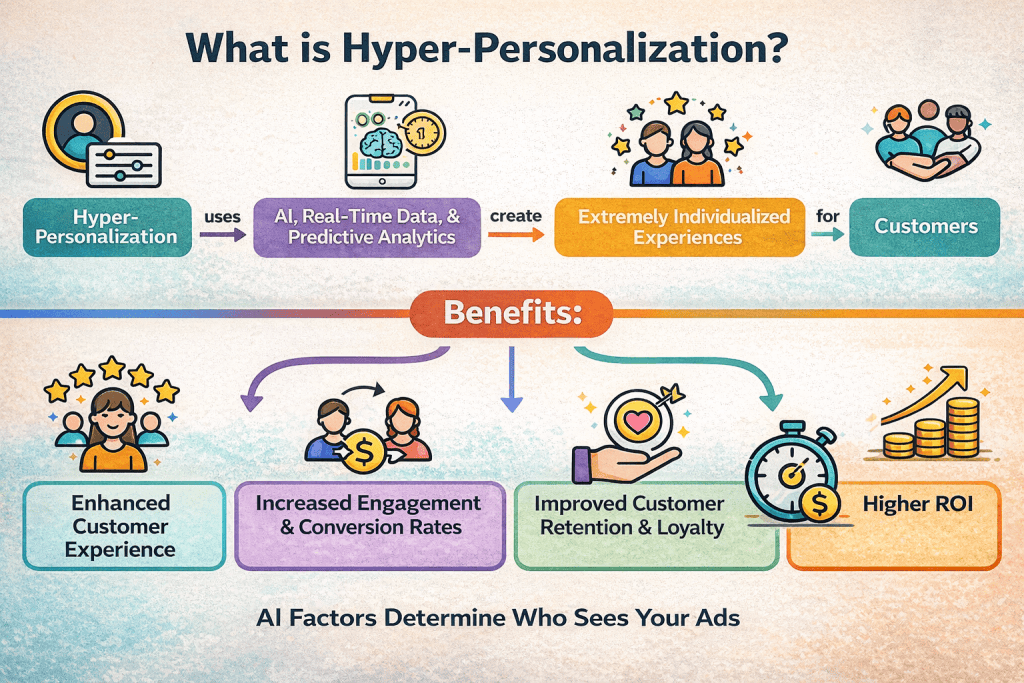
This approach looks at customer behaviour, preferences, and context as they shop. Instead of treating everyone the same, hyper-personalisation tailors every part of the shopping journey to what each person wants right now.
Businesses using these methods see higher sales and better customer loyalty. Fewer people abandon their shopping carts, too.
Let’s break down how hyper-personalisation works, what tech powers it, and how you can use it in your own ecommerce shop. You’ll get practical strategies that top brands use to create shopping experiences customers love, all while keeping data private and secure.
Key Takeaways
- Hyper-personalisation uses AI and real-time data to create individualised shopping experiences that boost conversions and reduce customer churn.
- Successful implementation needs high-quality product data, advanced AI tools, and a focus on customer privacy and data security.
- Leading ecommerce brands are already using hyper-personalisation strategies to increase revenue and build stronger customer relationships.
Defining Ecommerce Hyper Personalisation
Ecommerce hyper personalisation works at the individual level, using real-time data and artificial intelligence to tailor every part of the shopping experience. Instead of grouping customers into segments, hyper-personalisation in retail treats each visitor as totally unique.
Standard Personalisation vs. Hyper Personalisation
Standard personalisation in ecommerce uses basic demographic data and past purchases to create customer segments. For example, you might show running shoes to someone who bought trainers before, or send a discount code to all “loyal customers.”
Hyper-personalisation does things differently. It uses individual-level data and context like time of day, location, current browsing behaviour, and device type to adapt the experience in real time.
Traditional personalisation to hyper-personalisation is a shift from static segments to dynamic individual profiles.
Key Differences:
| Standard Personalisation | Hyper Personalisation |
|---|---|
| Based on past behaviour | Based on real-time behaviour and intent |
| Uses static customer segments | Uses dynamic individual profiles |
| Limited to product recommendations | Extends to content, pricing, timing, and communication |
| Batch updates | Continuous learning and adaptation |
Key Characteristics of Hyper Personalisation
Hyper-personalisation stands out because of a few core capabilities. We use AI and machine learning to analyse customer interactions across channels and predict what they’ll do next.
Predictive analytics helps forecast behaviours like purchase probability or churn risk. Real-time data processing means systems can adjust content, prices, or recommendations within seconds of a customer taking action.
Customer Data Platforms pull info from web analytics, CRM, loyalty programmes, and social media to build complete profiles. Natural language processing helps interpret customer reviews and support queries to understand context and sentiment, not just keywords.
AI-driven hyper-personalization isn’t just about product suggestions. It can personalise homepages, banners, pricing, promotions, and even when you get a message.
Personalisation and Customisation: Understanding the Difference
Personalisation and customisation both create tailored experiences, but they’re not the same thing. Personalisation happens automatically based on data we collect about customer behaviour.
Customisation is when the customer is in control. They choose their preferences, configure products, or adjust settings themselves—like picking the specs for a custom laptop.
A lot of ecommerce sites use both. You might customise your account preferences, while the system personalises product recommendations based on your browsing. Personalisation needs smart tech and good data, while customisation is all about easy-to-use interfaces and flexible product options.
Core Technologies Powering Hyper Personalisation
A bunch of advanced technologies work together to analyse customer data, predict behaviour, and deliver tailored experiences in real time. Machine learning spots patterns in huge amounts of data, and natural language processing makes search and communication feel more natural.
Role of Artificial Intelligence and Machine Learning
AI and ML are the backbone of hyper personalisation. They process customer data at scale, looking at browsing history, purchase patterns, and engagement metrics to figure out what each person likes.
Machine learning algorithms identify patterns in real-time, so systems can predict what customers want before they even search for it.
Recommendation engines use collaborative filtering and content-based algorithms to suggest products you’ll probably like. You see this when platforms recommend items based on what similar customers bought.
Deep learning models get better over time by learning from every interaction. AI-powered personalisation also goes beyond products—think dynamic pricing that adjusts in real time, or generative AI writing unique product descriptions and marketing messages.
These technologies deliver experiences that feel uniquely crafted for each customer, but can scale to millions of people at once.
Predictive Analytics in Ecommerce
Predictive analytics takes historical data and uses it to guess what customers will do next. It looks at purchase history, browsing patterns, and seasonal trends to figure out what shoppers might need soon.
We can predict when someone’s likely to make a repeat purchase or spot customers who might be about to leave.
Here’s what predictive analytics helps with:
- Inventory optimisation – Forecasting demand so you keep the right stock levels
- Customer lifetime value prediction – Spotting your most valuable customers
- Churn prevention – Catching warning signs before customers leave
- Cart abandonment reduction – Predicting and stopping incomplete purchases
Predictive AI models get more accurate as they see more data. This means we can personalise email timing, recommendations, and promotions based on how likely someone is to buy.
Natural Language Processing and Personalised Search
NLP lets customers search using regular, conversational language instead of just keywords. The technology understands intent and context, so it can deliver relevant results even if a query is vague or misspelled.
Shopping assistants powered by NLP can answer questions and recommend products through chat. Personalised search results change based on user behaviour and preferences—so if two people search for “running shoes,” they’ll see different results based on their own history.
The system learns from what you click and buy to make future results even better. NLP also powers sentiment analysis, so brands can quickly spot common concerns or highlights in thousands of reviews.
This info then feeds back into recommendation engines to suggest products that fit what customers are looking for.
Utilising Customer Data for Personalised Experiences
Customer data is the backbone of hyper personalisation. The best strategies use multiple types of data, collect behavioural signals in real time, and connect all the info through platforms that make insights actionable.
Types of Customer Data in Hyper Personalisation
Hyper personalisation relies on four main types of data. Behavioural data tracks how people use your site—pages viewed, time spent, cart actions, and more.
Transactional data is all about purchase history, order frequency, and basket value. Demographic data gives you basics like age, location, and device preferences, which helps tailor experiences to each customer.
Zero-party data is info that customers share on purpose, like preferences from quizzes or account settings. This is super reliable because it comes straight from the customer.
Big data technologies make it possible to process all this info efficiently. The challenge isn’t collecting data, but figuring out which signals matter most for each interaction.
Real-Time and Behavioural Data Collection
Real-time data collection lets you respond to customer intent as it happens. If someone starts browsing winter coats after looking at trainers, you can update recommendations right away.
Real-time behavioural data captures those tiny moments that show what customers want right now—searches, filter choices, even how far they scroll on a page.
Session-based tracking helps you understand context within a single visit. If someone browses baby products for the first time, you don’t instantly label them as a parent—you look for more signals.
Processing massive volumes of data in real time means your systems can keep up with customer needs as they change. This way, every interaction feels up-to-date and relevant.
Customer Data Platforms and Integration
A customer data platform (CDP) helps solve the problem of data scattered across different systems. Without a CDP, your marketing, commerce, and service tools all have different info.
Data management platforms and CRM systems store customer info, but CDPs go further. They create unified profiles that update in real time, so every system has the latest data.
Key CDP capabilities include:
- Unifying customer identities across devices and channels
- Managing consent and preferences in one place
- Activating data for personalisation without manual exports
- Providing real-time profile updates everywhere
The real magic happens when insights flow into live experiences. If a customer clicks a link in an email, their website experience should instantly reflect that. Service interactions should shape the offers they see.
Integration is what makes personalisation feel seamless instead of disconnected.
Benefits of Hyper Personalisation in Ecommerce
Hyper personalisation changes how businesses interact with shoppers by delivering experiences that are truly tailored. This approach boosts customer engagement, improves conversion rates, and helps build long-lasting relationships that keep buyers coming back.
Enhancing Customer Experience and Engagement
When we implement hyper personalisation, we create a more intuitive and engaging ecommerce customer experience that responds to individual preferences in real time. Rather than presenting generic product catalogues, hyper personalisation uses live data to dynamically shape individual journeys as shoppers browse.
This approach makes product discovery way easier. Customers find relevant items faster when we serve personalised recommendations based on their browsing behaviour, purchase history, and contextual signals.
A shopper who frequently views running shoes will see related athletic wear and accessories rather than unrelated products. The impact on customer engagement is substantial.
77% of consumers feel frustrated by irrelevant promotional notifications, while 52% report higher satisfaction as experiences become more personalised. We can reduce this friction by delivering content and offers that align with actual customer interests.
Personalised customer experiences go beyond just product suggestions. They include tailored content, customised pricing for loyalty members, and communication through preferred channels at optimal times.
Increasing Conversion Rates and Average Order Value
Hyper personalisation has a direct impact on purchasing decisions and basket sizes. When we present personalised product recommendations at key moments, shoppers are more likely to complete purchases and add complementary items.
Higher conversion rates come from reducing decision fatigue. By filtering out irrelevant options and highlighting products that match proven preferences, the buying journey gets smoother.
A customer who abandoned a cart might receive a personalised offer through their preferred channel, addressing specific hesitations like pricing concerns. Average order value (AOV) increases through strategic recommendation placement:
- Cross-sell suggestions based on current basket contents
- Premium product alternatives tailored to browsing patterns
- Bundle offers aligned with purchase history
- Personalised upsells during checkout
The Boston Consulting Group forecasts that leaders in personalisation grow revenue ten points faster annually than laggards. Over the next five years, $2 trillion USD in revenue will shift to companies creating personalised experiences.
Personalisation feels most effective when it’s helpful, not pushy. Showing dishwasher accessories to someone who just bought a dishwasher adds value, but continuing to advertise dishwashers would just annoy them.
Driving Customer Loyalty and Retention
Building brand loyalty is all about consistent, relevant interactions that make customers feel understood. Hyper personalisation strengthens these connections by treating each shopper as an individual rather than a segment.
Customer retention improves when we deliver personalised experiences across the entire journey. This includes post-purchase engagement like replenishment reminders for consumable products or exclusive early access to new items matching past purchases.
These touchpoints show we remember customer preferences and anticipate their needs. Repeat customers generate more value over time, making customer lifetime value a critical metric.
Hyper personalisation in retail offers benefits that go beyond what traditional personalisation can provide by continuously adapting to evolving preferences. Personalised loyalty programmes are a powerful retention tool.
Instead of generic points, we can provide rewards tailored to individual shopping habits. A customer who frequently buys pet supplies might get exclusive discounts on their favourite brands or personalised service recommendations.
We build trust through data transparency. When customers understand how their information improves their experience, they’re more willing to share preferences and engage more deeply with our brand.
This creates a positive cycle where better data enables more relevant personalisation, which in turn encourages greater customer engagement.
Practical Strategies and Examples
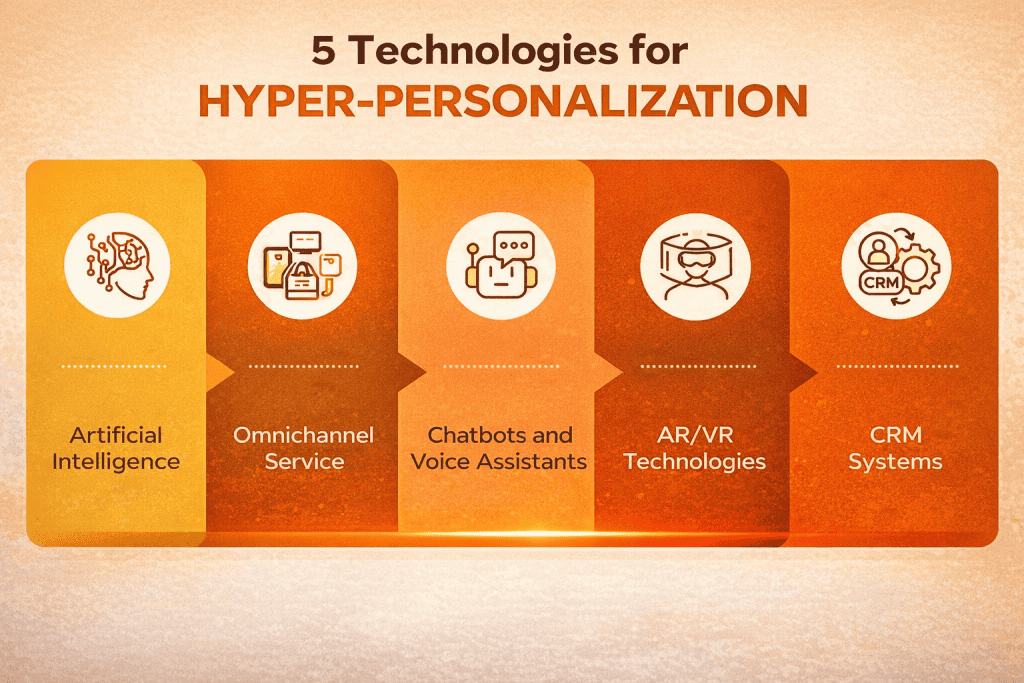
Modern hyper-personalisation strategies rely on real-time data and artificial intelligence to create tailored shopping experiences. These approaches move beyond basic segmentation to treat each customer as an individual market.
AI-Driven Product Recommendations
We can implement AI-powered recommendation engines that analyse multiple data points simultaneously. These systems look at purchase history, browsing behaviour, time spent on specific pages, and items added but not purchased.
Amazon does this really well. Their AI-driven product recommendations go beyond “customers who bought this also bought that” logic.
The system compares individual behaviour patterns against millions of other shoppers to identify taste clusters. It might recommend a specific coffee brand because you purchased a particular coffee maker six months ago, predicting you’re running low.
This level of personalisation increases average order values and reduces decision fatigue. The recommendations feel predictive, anticipating needs before customers even realise them.
Dynamic Content and Offers
We design websites that rearrange themselves for each visitor. Nike uses this by showing different homepage content based on browsing history.
Someone interested in running shoes sees marathon training content and new running releases. Basketball fans get NBA promotions and Air Jordan launches.
Dynamic experiences extend to promotional banners, navigation menus, and personalised offers. This makes it easier for customers to find what they want.
We can also implement geolocation-based offers that send push notifications when customers walk near physical stores, blending digital and in-person shopping.
Personalised Search and Discovery
We optimise product search by reranking results for every user. A search for “shirts” usually shows popular or high-margin items first.
With personalisation tools, the algorithm prioritises products based on past purchases, favourite brands, materials, and price ranges. If you’ve bought Patagonia before, that brand pops up higher in your results.
The system also considers preferences for organic materials or specific sizing. This basically turns the search bar into a personal shopping assistant, helping customers find what they want faster and improving retargeting.
Data Privacy, Security, and Ethical Considerations

Hyper-personalisation means collecting and analysing a lot of customer data, which comes with big responsibilities around privacy and trust. Hyper-personalisation relies on extensive data collection that must be handled with proper governance to avoid privacy violations and legal risks.
Balancing Personalisation With Privacy
We face a challenge: customers want tailored experiences but worry about how we use their data. This is the personalisation-privacy paradox, where people want relevant content but are concerned about data misuse.
To balance these interests, we need clear legal grounds for processing personal data under UK GDPR. We can rely on legitimate interests if processing is necessary for our operations and doesn’t override individual rights.
Direct marketing often qualifies under this basis, but we need to do a careful balancing test. Alternatively, we can get explicit consent from customers.
This means fully informing people about data usage and getting their clear agreement. Consent must be revocable at any time, which can be tricky to manage.
It’s not just about the sensitivity of data. We also need to consider if our personalisation leads to some customers getting better deals while others miss out.
Ensuring Data Protection and Security
Strong data protection is the foundation of responsible hyper-personalisation. We need solid policies for how we collect, store, process, and share personal data.
Before processing any personal data, we should:
- Define clear objectives for hyper-personalisation use
- Conduct data protection impact assessments to spot and fix risks
- Set up data management policies with strong security controls
- Implement consent mechanisms that are transparent and easy to revoke
- Do regular audits to catch ethical and legal issues
- Ensure AI explainability with clear documentation
We also need to know where our training data comes from. If the source is unclear, it can create compliance headaches.
Data anonymisation adds another layer of protection. Where possible, we should anonymise personal info to reduce privacy risks while still delivering personalisation.
Addressing Customer Concerns and Transparency
Transparency isn’t just about ticking boxes—it’s key for building customer trust. We should openly communicate our processes and reasons for using data.
Our privacy communications should cover:
- What data we collect
- Why we process it
- How we protect it
- How long we store it
- Who has access to it
We need to inform customers about our use of AI algorithms. Explaining how our systems make decisions, what data influences those decisions, and the potential consequences helps build trust.
Just-in-time notifications work better than lengthy privacy policies. Providing relevant info at the moment we collect data makes it easier for customers to understand what they’re agreeing to.
We should also encourage cultural awareness within our organisations about the ethical side of data usage. When everyone on the team thinks about ethics, we make better decisions.
Regular updates about our data practices keep customers in the loop and show we’re committed to protecting their privacy.
The Future of Ecommerce Hyper Personalisation
AI and hyper personalisation are reshaping the future of commerce through autonomous decision-making and real-time adaptation. The evolution includes sophisticated automation that responds instantly to customer behaviour while navigating privacy concerns and technical complexity.
Emerging Trends and Innovations
We’re seeing a shift towards agentic AI that can make decisions on its own, based on customer context and behaviour. This tech goes beyond simple recommendations and starts to predict what people need before they even know it.
Dynamic pricing is getting smarter through AI analysis. Systems now adjust prices in real time based on things like:
- Customer purchase history and browsing patterns
- Current inventory levels and demand
- Competitive pricing data
- Individual customer lifetime value
Predictive analytics are forecasting customer behaviour with impressive accuracy. Commerce platforms are using unified data to build single customer profiles that adapt over time.
Generative AI creates personalised content at scale while keeping brand consistency. Conversational commerce is also growing, where AI agents guide customers through their entire personalisation journey with natural dialogue.
Scalability and Real-Time Automation
Real-time automation lets us deliver hyper-personalised experiences to millions of customers at once. This needs unified commerce systems that centralise all customer, product, and transaction data in one place.
Composable architecture means businesses can adapt quickly without overhauling everything. We can swap out individual components and keep the overall system running smoothly.
Machine learning models are always analysing data streams—browsing behaviour, transaction history, location, and channel preferences. These systems update customer profiles dynamically instead of relying on static segments.
Automation now handles abandoned cart recovery, loyalty programme rewards, and cross-channel messaging without manual work. The technology tweaks offers based on context, like recognising pricing hesitation and adjusting promotions through the customer’s favourite channel.
Challenges and Opportunities Ahead
Privacy regulations like GDPR and CCPA require transparent data practices. We need to balance personalisation with customer trust by offering clear opt-ins and preference centres.
Over the next five years, $2 trillion in revenue will shift to companies creating personalised experiences. Yet 77% of consumers still get frustrated by irrelevant promotional notifications.
Technical integration is tough. Many businesses struggle with:
- Data silos blocking unified customer views
- Legacy systems that don’t play well with modern AI tools
- Resource constraints for testing and optimisation
The real opportunity is getting personalisation right. Leaders in personalisation grow revenue ten points faster each year than competitors.
We need to focus on personalisation that’s actually helpful and timely, not just more noise across channels.
Frequently Asked Questions
Businesses need practical answers about implementing advanced personalisation systems while protecting customer data and maintaining trust. The following questions address technical integration, privacy safeguards, data requirements, analytics timing, customer retention benefits, and user experience balance.
How can businesses effectively integrate AI to enhance personalisation in online shopping experiences?
First, connect AI systems to your existing customer data platforms and e-commerce tools. Machine learning models then analyse things like browsing history, purchase patterns, and product interactions to build individual profiles.
Natural language processing helps chatbots understand customer questions and suggest products that actually make sense. Recommendation engines use collaborative filtering to match shoppers with products based on similar customers’ purchases.
Real-time data processing lets you instantly tweak product displays, pricing, and marketing messages. It’s smart to test AI models with small customer groups before rolling them out everywhere.
Blending multiple AI technologies works best, instead of just relying on one. This could mean using deep learning for image recognition, predictive analytics for forecasting demand, and reinforcement learning for dynamic pricing.
What privacy concerns should companies address when implementing hyper-personalisation strategies in e-commerce?
Always get clear consent before collecting and using customer data for personalisation. Make sure customers know exactly what info you’re gathering, how it’s used, and who can see it.
Data security is crucial when storing detailed shopping profiles. Use encryption, access controls, and regular security checks to keep everything safe.
Give customers control over their data with privacy dashboards where they can view, change, or delete their info. Being transparent about how algorithms make decisions helps build trust.
Only collect what’s actually needed, and don’t keep data longer than necessary. For cross-border data transfers, follow regulations like GDPR and keep your data practices up to date.
What are the key data sources for developing hyper-personalised recommendations for customers?
Behavioural data like pages viewed, time spent, search queries, and abandoned carts all reveal customer interests. Purchase history gives a direct look at what people like to buy.
Demographic info such as age, location, and device type helps put shopping behaviour in context. Click-through rates on emails and ads show which messages actually work.
Product interaction data—like engagement with images, videos, reviews, and specs—offers more insight. Tracking seasonal patterns helps you know when customers shop for certain items.
With consent, third-party data can add even more detail. Social media signals and external browsing habits help round out customer profiles.
Real-time data, like weather, local events, and inventory, lets you adjust recommendations on the fly. Combining structured data from databases with unstructured info from customer service chats gives the full picture.
How do real-time analytics impact the success of personalisation efforts in e-commerce platforms?
Real-time data processing lets you personalise experiences as customers shop, not hours later. Product recommendations can change within milliseconds based on what someone is doing right now.
Instant analytics help spot trending products and adjust promotions during busy times. If a customer looks like they’re about to leave, you can trigger special offers to keep them around.
Live inventory tracking ensures you don’t recommend products that are out of stock. You can also monitor competitor prices and adjust your own in real time to stay competitive.
Real-time analytics highlight moments when customers might need help, so you can offer chatbots or live support at just the right time. Using both current and historical data together gives you the best shot at predicting what customers want.
In what ways can hyper-personalisation contribute to increased customer loyalty in the digital marketplace?
Personalised experiences make customers feel seen and understood. Showing relevant products and content saves them time and makes shopping smoother.
Tailored recommendations help people discover new products they wouldn’t find otherwise. Remembering preferences, sizes, and special occasions helps build a stronger connection.
Loyalty programmes work better when rewards are customised to individual shopping habits. Personalised communication—like emails and notifications—reduces message fatigue and keeps people interested.
Predicting when customers need to reorder consumables encourages repeat purchases. Keeping personalisation consistent across all channels creates a seamless experience that keeps customers coming back.
What best practices should retailers follow to balance personalisation and user experience without overwhelming shoppers?
We limit the number of personalised elements on each page to keep things simple. Shoppers need clear navigation options that aren’t buried by recommendations.
Being transparent about why we show certain products helps build trust. We also offer options to refresh recommendations or let us know when suggestions aren’t quite right.
Personalisation is there to enhance browsing and search, not replace them. We give customers control with preference centres and customisation options.
Testing different levels of personalisation shows what works for different people. Some shoppers want minimal changes, while others like more guidance.
We steer clear of messaging that feels too familiar or invasive. Balancing personalisation with privacy means always keeping an eye on feedback and making adjustments.
Rolling out changes gradually helps us see what customers actually value. We focus on personalisation where it really helps, like making product discovery and checkout smoother.