Ever wondered what makes a website turn visitors into customers? That’s where conversion rate optimisation comes in.
Conversion rate optimisation (CRO) increases the percentage of website visitors who take a desired action, such as making a purchase, signing up for a newsletter, or filling out a contact form. CRO makes your website work harder for you, without spending more on advertising or driving more traffic.

When we implement CRO strategies, we study how users navigate our site and what actions they take. We also identify what’s stopping them from completing our goals.
By understanding these behaviours, we make informed changes that remove obstacles and create clearer paths to conversion. This approach uses data to guide decisions and is cost-effective.
Instead of making random changes based on guesses, we test specific elements to see what increases conversion rates. We might tweak headlines, adjust call-to-action buttons, or redesign landing pages to improve user experience.
Key Takeaways
- CRO helps you maximise website value by turning more existing visitors into customers without increasing traffic costs.
- A data-driven approach to CRO involves understanding user behaviour, testing changes, and making improvements based on actual results.
- Regular testing and optimisation create ongoing improvements to conversion rates, leading to better ROI for all marketing efforts.
Understanding Conversion Rate Optimisation (CRO)
Conversion Rate Optimisation is a systematic approach to improving website performance. It increases the percentage of visitors who complete desired actions.
We’ll explore what CRO is, why it matters, and which metrics help measure its success.
Defining Conversion Rate Optimisation
Conversion Rate Optimisation (CRO) increases the percentage of website visitors who take a desired action. These actions, known as conversions, include making a purchase, signing up for a newsletter, downloading content, or filling out a form.
CRO analyses how users navigate your site and what actions they take. We use this data to identify what stops them from completing your goals.
CRO uses:
- A/B testing
- User feedback
- Analytics insights
- Behaviour analysis
Instead of simply driving more traffic, CRO focuses on making the most of existing visitors by optimising their experience. The systematic CRO framework transforms casual browsers into engaged customers through strategic improvements.
The Importance of CRO for Digital Marketing
Attracting website traffic is only half the battle. CRO helps us maximise the value of existing traffic, making it essential for digital marketing.
When implemented properly, CRO:
Reduces acquisition costs – More conversions from existing traffic mean less spent on attracting new visitors.
Enhances user experience – CRO improves site usability and satisfaction.
Provides valuable insights – Testing shows what motivates your audience to take action.
CRO encourages more website visitors to become engaged followers and purchasers. This creates a sustainable growth model for your marketing efforts.
Key Metrics in CRO
To implement successful CRO strategies, we track the right metrics to indicate performance and areas for improvement.
The primary metrics include:
- Conversion Rate – The percentage of visitors who complete desired actions
- Bounce Rate – The percentage of visitors who leave after viewing only one page
- Exit Rate – Where users most commonly leave your conversion funnel
- Average Session Duration – How long users engage with your content
We also track micro-conversions like email sign-ups, page views per visit, and add-to-cart rates. These smaller actions often lead to major conversions.
The CRO process involves continuous monitoring of these metrics to find opportunities for optimisation. By establishing baseline measurements and tracking changes after improvements, we can measure the success of our efforts.
Conversion Rate Optimisation Strategy
A solid CRO strategy helps turn website visitors into customers through systematic improvements. These approaches focus on understanding user behaviour, setting measurable goals, and creating seamless customer experiences that drive action.
Setting Clear Conversion Goals
Before optimising anything, we need to establish what counts as a successful conversion. Conversion rate optimisation starts with identifying the specific actions you want visitors to take.
Common conversion goals include:
- Product purchases
- Form submissions
- Newsletter sign-ups
- Account creations
- Content downloads
Your goals should be SMART: Specific, Measurable, Achievable, Relevant, and Time-bound. For example, instead of “increase sales,” aim to “increase checkout completions by 15% within three months.”
We recommend prioritising your goals based on business impact. Primary conversions (like sales) directly affect revenue, while secondary conversions (like email subscriptions) build your future pipeline.
Tracking mechanisms must be in place to measure performance against these goals. This forms the foundation for testing and measuring improvements.
Understanding Your Audience
Successful CRO relies on knowing your website visitors. We need comprehensive data about who they are, how they behave, and what they want.
Tools to gather audience insights include:
- Analytics platforms
- Heatmaps and session recordings
- User surveys and feedback forms
- A/B testing results
Creating detailed user personas helps identify pain points and opportunities. These profiles represent segments of your audience with distinct needs and behaviours.
We map the customer journey to understand each touchpoint. This process reveals where potential customers encounter friction or drop off before converting.
Analysing competitors can also provide insights. Examine what works for similar businesses and find gaps you can address through optimisation.
Customer Experience and Conversion
The path from visitor to customer must be intuitive and easy. CRO strategies focus on removing barriers and improving elements that encourage action.
Key areas to optimise include:
Website Speed and Performance
Slow-loading pages reduce conversion rates. We ensure quick load times across all devices and connections.
Clear Value Propositions
Visitors should quickly understand what you offer and why it matters. Use strong, benefit-focused messaging to address customer needs.
Simplified Conversion Paths
Every extra step reduces completion rates. Streamline forms, checkout processes, and navigation to make conversion effortless.
Trust Signals
Add testimonials, reviews, security badges, and guarantees to build confidence in your offerings.
CRO maximises the value of existing traffic and improves ROI across all channels.
The Role of Website Traffic in CRO
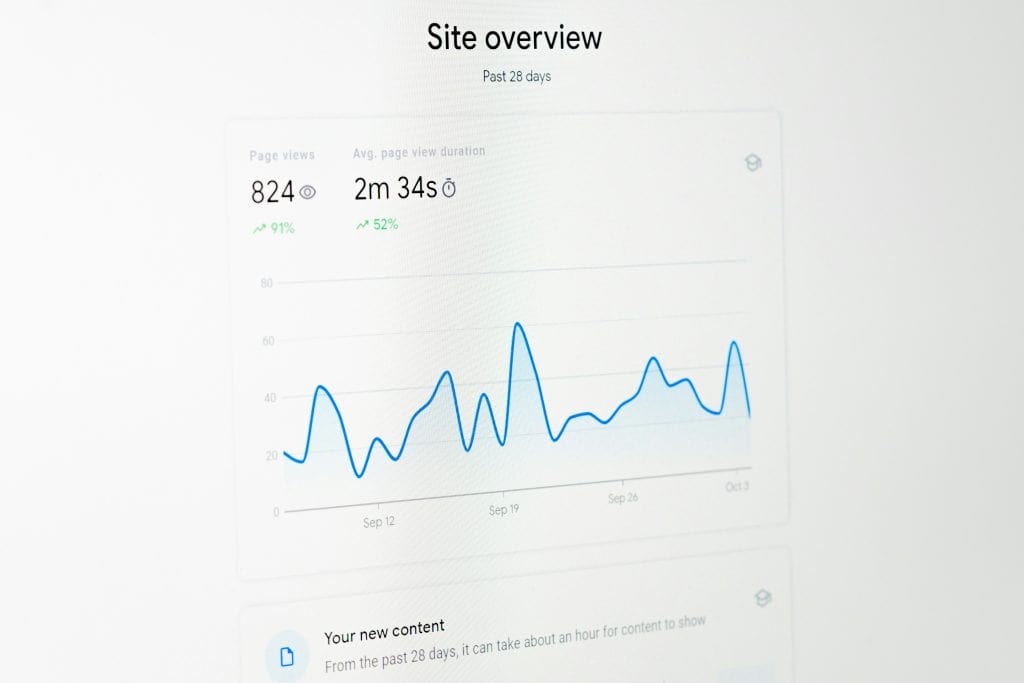
Website traffic forms the foundation of any conversion rate optimisation strategy. The quantity and quality of visitors directly impact how well your CRO efforts work.
Analysing Different Traffic Sources
Traffic sources vary in their conversion potential. We find that understanding where your visitors come from helps target CRO efforts more effectively.
Direct traffic, search engines, social media, and email campaigns bring different types of visitors with varying intent. Search traffic often shows higher purchase intent, while social media visitors might need more nurturing.
Properly segmenting traffic sources reveals which channels deliver the highest-converting visitors. It’s important to examine:
- Bounce rates by traffic source
- Time on site for different referral channels
- Conversion paths across multiple sessions
We recommend using UTM parameters to track campaign effectiveness. This detailed view allows for targeted optimisation of specific traffic segments.
Qualifying and Targeting Relevant Traffic
Not all website visitors are equal. CRO methodology helps extract the most potential from your traffic, but focusing on relevant visitors is key.
Higher traffic volumes don’t always mean more conversions. Quality matters more than quantity.
Targeted traffic that matches your ideal customer profile converts at much higher rates. Consider these approaches:
- Refine PPC campaigns to attract visitors with specific intent
- Create content that appeals to your ideal customers
- Optimise landing pages for specific traffic segments
Personalisation plays a critical role. When we tailor experiences based on traffic source, location, or past behaviour, conversion rates usually improve.
By focusing on attracting relevant traffic, your CRO efforts become more efficient and lead to higher conversions.
CRO Testing Methods
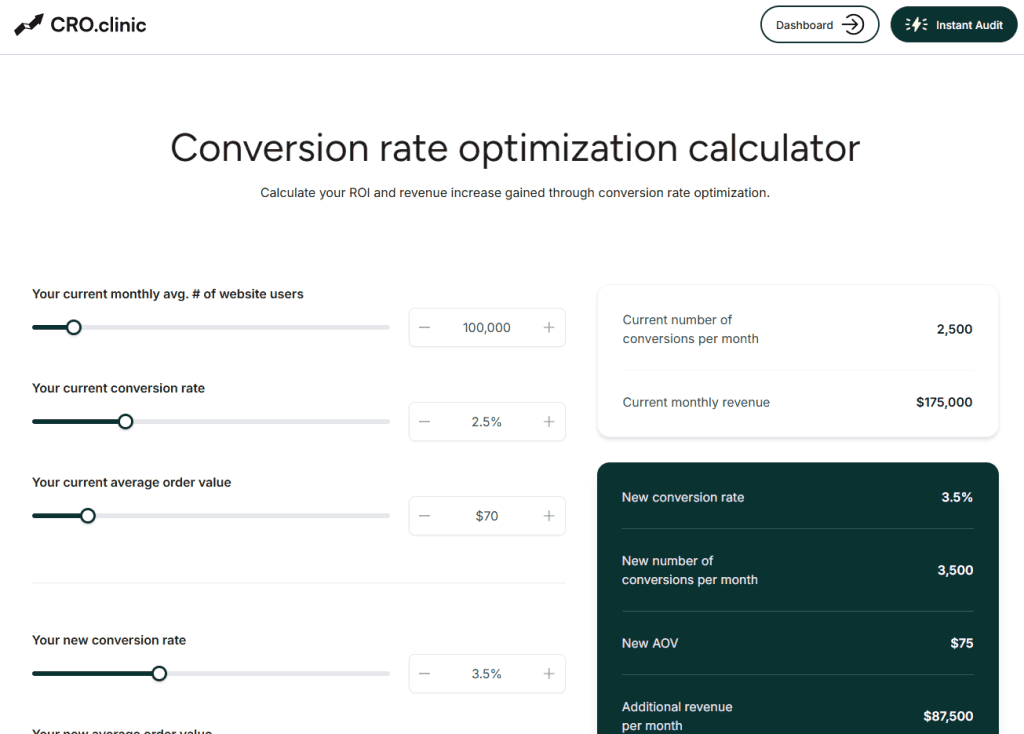
Testing forms the backbone of effective conversion rate optimisation.
By systematically evaluating different elements of your website, we can identify what truly resonates with visitors and drives them to convert.
Implementing A/B Testing
A/B testing, also called split testing, compares two versions of a webpage to see which performs better.
We create version A (the control) and version B (the variant) with a single element changed, such as a headline, button colour, or image.
To run an effective A/B test:
- Identify your goal – Define what conversion means for the page (purchases, sign-ups, etc.)
- Form a hypothesis – Example: “Changing our CTA button from green to red will increase clicks by 10%”
- Split your traffic – Send equal portions of visitors to each version
- Analyse results – Look for statistically significant differences
A/B testing works best when you change one element at a time.
This approach lets us clearly identify which changes impact conversion rates without confusing variables.
Multivariate Testing Explained
Unlike A/B testing, multivariate testing examines multiple variables at the same time.
We might test different headlines, images, and button colours all at once to see which combination performs best.
The benefits of multivariate testing include:
- Discovering how elements interact with each other
- Testing more variations in a single experiment
- Finding the optimal combination faster
Multivariate tests require significantly more traffic to produce reliable results.
We recommend using this method only when your site receives substantial daily visitors.
A typical multivariate test might examine 3-4 elements with 2-3 variations each, creating numerous possible combinations to evaluate.
Using Surveys for Customer Insights
Direct feedback through surveys provides invaluable qualitative data that complements our quantitative testing.
We can uncover why visitors aren’t converting, not just that they aren’t.
Effective survey types include:
- Exit surveys – Appear when a visitor is about to leave your site
- On-page surveys – Target specific pages with focused questions
- Post-purchase surveys – Gather feedback from successful conversions
Keep surveys brief with 3-5 questions maximum.
Ask specific questions like “What nearly stopped you from making a purchase today?” rather than general ones.
Data Analysis and Tools for CRO

Effective conversion rate optimisation relies on robust data analysis and the right toolkit.
Data shows us where users drop off and which elements need improvement to boost conversions.
Utilising Google Analytics
Google Analytics serves as the foundation for CRO data collection.
We recommend setting up conversion goals to track specific user actions like form submissions, purchases, or sign-ups.
The Behaviour Flow report shows how users navigate through your site.
This highlights potential friction points.
Look for pages with high exit rates to identify improvement opportunities.
Custom segments let us analyse different user groups separately.
For example, comparing new versus returning visitors can reveal distinct conversion patterns.
Advanced features like Enhanced E-commerce tracking provide detailed product performance metrics.
This helps pinpoint which items drive conversions and which need optimisation.
Set up Google Analytics 4 events to track micro-conversions such as:
- PDF downloads
- Video views
- Add-to-cart actions
- Email link clicks
Interpreting Bounce Rates and Conversion Paths
Bounce rate measures the percentage of visitors who leave without interacting with your page.
High bounce rates often signal content misalignment with visitor expectations or poor user experience.
We must analyse bounce rates in context.
A high bounce rate on a blog post might be normal, but on a product page, it suggests conversion problems.
Multi-Channel Funnel reports reveal how different channels work together before conversion.
This helps us understand the full customer journey rather than just the last touchpoint.
Use Funnel Visualisation to identify where users abandon your conversion process.
Each step’s drop-off percentage highlights specific pain points requiring attention.
Consider these metrics alongside qualitative data from user testing and surveys for a complete picture of conversion obstacles.
Integrating CRO with SEO
When properly aligned, conversion rate optimisation and search engine optimisation create a powerful force for driving business results.
These two disciplines can work together to not only bring visitors to your site but also turn them into customers.
The Synergy between CRO and SEO
Conversion rate optimisation (CRO) and SEO serve complementary goals.
SEO focuses on attracting qualified traffic, while CRO works to convert that traffic into meaningful actions.
These strategies benefit each other directly.
When our SEO efforts bring highly relevant visitors to the site, our conversion rates naturally improve.
When CRO improves user experience, metrics like time on site and bounce rate improve, which signals quality to search engines.
User-friendly page structures benefit both disciplines.
Clear headings, logical navigation, and mobile optimisation satisfy both users and search algorithms.
A/B testing for CRO also provides valuable SEO insights.
Testing different headlines or content formats shows us what resonates with visitors, which can inform our keyword strategy and content creation.
Content Optimisation for Conversion
Content sits at the intersection of CRO and SEO.
We must balance both to serve our goals effectively.
When we create content, we optimise for both discoverability and action-taking.
This means:
- Keyword research that considers both search volume and conversion intent
- Strategic CTAs placed naturally within optimised content
- Clear, benefit-focused headings that include relevant keywords
- Scannable formats with bullet points and short paragraphs
E-commerce sites particularly benefit from this integrated approach.
Product descriptions must contain the right keywords whilst also compelling purchases.
Landing pages represent another critical integration point.
We design these to rank for targeted terms while providing clear paths to conversion through persuasive copy and strategically placed buttons.
Enhancing Usability for Better Conversion Rates
Website usability directly impacts how visitors interact with your site and whether they complete desired actions.
Well-designed interfaces remove friction points and create clear paths to conversion.
Optimising Page Load Times
Page speed is a critical factor in conversion rate optimisation.
Studies show that visitors abandon websites that take longer than 3 seconds to load.
To improve load times, we recommend compressing images, minifying CSS and JavaScript files, and implementing browser caching.
Consider these practical steps:
- Audit current page speeds using Google PageSpeed Insights
- Remove unnecessary plugins and scripts
- Optimise media files without sacrificing quality
- Implement lazy loading for below-the-fold content
CDN implementation can distribute your content across multiple servers, reducing load times for visitors regardless of their location.
This simple change can dramatically improve user experience and keep potential customers engaged.
Mobile Responsiveness and Conversions
With mobile traffic accounting for over half of all web visits, responsive design is essential for conversion rate optimisation.
Mobile-friendly websites adapt seamlessly to different screen sizes and touch interfaces.
Key elements of mobile optimisation include:
- Touch-friendly navigation with appropriately sized buttons
- Simplified forms with fewer fields for mobile users
- Readable text without requiring zoom or horizontal scrolling
- Fast-loading mobile pages optimised for cellular connections
Mobile-specific user interface design improvements can increase conversion rates by 15-25%.
Test mobile interfaces regularly with real users to identify pain points in the customer journey.
Ongoing CRO Management
Effective Conversion Rate Optimisation requires continuous attention and strategic management.
Regular testing, analysis, and adaptation form the backbone of successful CRO.
Continuous Improvement Cycle
The most successful CRO programmes follow a structured improvement cycle.
We begin by collecting comprehensive data about user behaviour through tools like heatmaps, session recordings, and analytics.
This data forms the foundation for developing testable hypotheses about what might improve conversion rates.
After implementing A/B or multivariate tests, we carefully analyse the results to determine what changes actually boost conversions.
Winning variations are then implemented permanently on the website.
Each successful test provides new insights that feed into the next round of optimisation strategies.
Even “failed” tests provide valuable information about user preferences and behaviour.
Key elements of effective continuous improvement:
- Regular testing schedule (weekly or bi-weekly)
- Prioritisation framework for test ideas
- Documentation of all test results
- Implementation protocols for successful changes
Staying Updated with CRO Trends
The digital marketing landscape evolves rapidly, and CRO strategies must adapt accordingly.
We maintain connections with leading CRO communities, attend industry conferences, and subscribe to digital marketing publications to stay ahead of emerging trends.
New technologies like AI-powered personalisation, predictive analytics, and advanced segmentation tools regularly reshape what’s possible in CRO.
These innovations help us deliver more targeted experiences to website visitors.
Mobile optimisation continues to grow in importance as more consumers shop via smartphones.
We ensure our CRO testing always considers the mobile experience alongside desktop.
Privacy regulations like GDPR and the deprecation of third-party cookies present challenges to traditional tracking methods.
Our approach evolves to emphasise first-party data collection and transparent user experiences that still support effective conversion optimisation.
Frequently Asked Questions
Many businesses have questions about how to implement conversion rate optimisation effectively.
Below we address the most common queries regarding strategies, tools, examples, and integration with other digital marketing elements.
How can one effectively strategise for conversion rate optimisation?
Start your conversion rate optimisation strategy with clear objectives. Decide what actions you want visitors to take and what brings the most value to your business.
Data analysis is the backbone of any CRO strategy. Examine user behaviour through heatmaps, session recordings, and analytics to find areas for improvement.
Use A/B testing to compare different versions of your website elements. This approach shows which changes actually improve conversion rates.
What tools are recommended to enhance conversion rates?
Several powerful tools can support your CRO efforts. Google Analytics gives insights into user behaviour and conversion tracking.
Heatmap tools like Hotjar or Crazy Egg show where users click, move, and spend time on your pages. These visuals help you spot usability issues quickly.
A/B testing platforms such as Optimizely and VWO let you experiment with different page elements. They provide analysis to determine which variations work best.
User feedback tools, including surveys and on-site polls, collect direct input from visitors. This feedback complements your quantitative data.
What examples illustrate successful conversion rate optimisation in practice?
A travel booking site increased conversions by 28% after simplifying their checkout process. They removed unnecessary form fields and added a progress indicator.
An e-commerce retailer saw a 15% sales increase after optimising product pages with better images, clearer pricing, and more visible call-to-action buttons based on systematic CRO approaches.
A B2B software company doubled their lead generation by redesigning their landing page with testimonials and clearer value propositions. Their form completion rate rose significantly after making these changes.
How does conversion rate optimisation integrate with digital marketing?
CRO boosts the return on investment for paid advertising. Optimised pages convert more visitors from ads, making your marketing spend more effective.
Content marketing benefits from CRO by focusing on converting visitors, not just attracting them. Apply conversion best practices to blog posts, videos, and other content formats.
Email marketing campaigns work better when landing pages are optimised for conversion. A smooth experience from email to website keeps users interested.
What role does conversion rate optimisation play within a business?
CRO increases the percentage of visitors who become customers or leads, directly impacting revenue growth. This makes it a key business function.
It creates a better user experience that builds trust and encourages repeat business. When users enjoy your website, they’re more likely to return and recommend it.
CRO also reveals customer preferences and pain points through testing. These insights can inform wider business decisions.
In what ways do conversion rate optimisation and search engine optimisation intersect?
Page speed improvements benefit both SEO and CRO. Faster-loading pages rank better in search results and provide a better user experience that increases conversion likelihood.
User-friendly navigation helps search engines understand your site structure. It also makes it easier for visitors to find what they need.
Quality content attracts search traffic and convinces visitors to take action. We create content that answers user questions and guides them toward conversion.
Mobile optimisation helps your site rank well in Google’s mobile-first index. A responsive design also improves conversions from mobile users.