Facebook advertising changed significantly in 2026. Meta updated their targeting options, and on 31 March 2026, detailed targeting exclusions were removed from existing campaigns.
This forced advertisers to adapt their strategies. The most effective approach now uses Meta Advantage+ audiences, which lets Facebook identify potential customers based on your data while respecting stricter privacy regulations.

Many advertisers have noticed changes in Meta’s ability to recognise their customers. Some express concerns about traffic quality.
To succeed, focus on building stronger first-party data. Leverage Facebook’s new audience tools that fit within current privacy frameworks.
The complete Facebook ads strategy for 2026 has shifted to a more automated, AI-driven approach. Manual targeting control is now limited.
Key Takeaways
- Meta removed detailed targeting exclusions, so advertisers now use Advantage+ features for audience-building.
- First-party data is crucial for campaign success as Facebook’s targeting capabilities changed under stricter privacy regulations.
- Performance measurement now relies on conversion API implementation and Meta’s machine learning for ad delivery and audience targeting.
Understanding Meta Ads Targeting in 2026
Meta’s targeting capabilities now offer more precise audience reach. These changes help businesses connect with potential customers across Facebook, Instagram, and other Meta properties while respecting privacy concerns.
What Is Meta Ads Targeting?
Meta Ads targeting lets advertisers specify who sees their adverts across Meta’s platforms, including Facebook, Instagram, Messenger, and WhatsApp. This system uses user data, behaviours, and preferences to deliver ads to relevant audiences.
The core of Meta’s targeting system is the Meta Ads Manager. This dashboard lets you create and manage campaigns.
Through this interface, you can define your ideal audience based on:
- Demographics: Age, gender, location, language
- Interests: Hobbies, favourite entertainment, shopping habits
- Behaviours: Purchase history, device usage, travel patterns
- Connections: People who interact with your page, app, or events
Meta’s AI matches your adverts with users most likely to respond positively to your content.
Evolution of Audience Targeting
Meta’s targeting approach has changed a lot since the platform’s early days. Privacy regulations and consumer expectations forced these adjustments.
In previous years, Meta offered extremely granular targeting options. Recent updates to detailed targeting removed the ability to use detailed targeting exclusions.
Meta believes this change improves campaign performance while maintaining audience reach. The shift toward AI-driven audience optimisation is now prominent.
Instead of manually selecting every targeting parameter, we rely on Meta’s algorithms to find the right audience based on campaign objectives.
First-party data is now more valuable as third-party cookies phase out. Businesses focus on building direct relationships with customers through:
- Custom Audiences from customer lists
- Website visitor retargeting
- Engagement-based audiences
Key Differences in 2026
The 2026 Meta targeting landscape features several big changes. The Facebook ad targeting options are now streamlined to prioritise performance and respect user privacy.
Automated Audience Expansion is now a default feature. Meta’s AI identifies users similar to your core audience, compensating for the removal of some manual options.
Signal preservation is crucial. We must implement the Meta pixel correctly and use Conversions API for reliable data transmission.
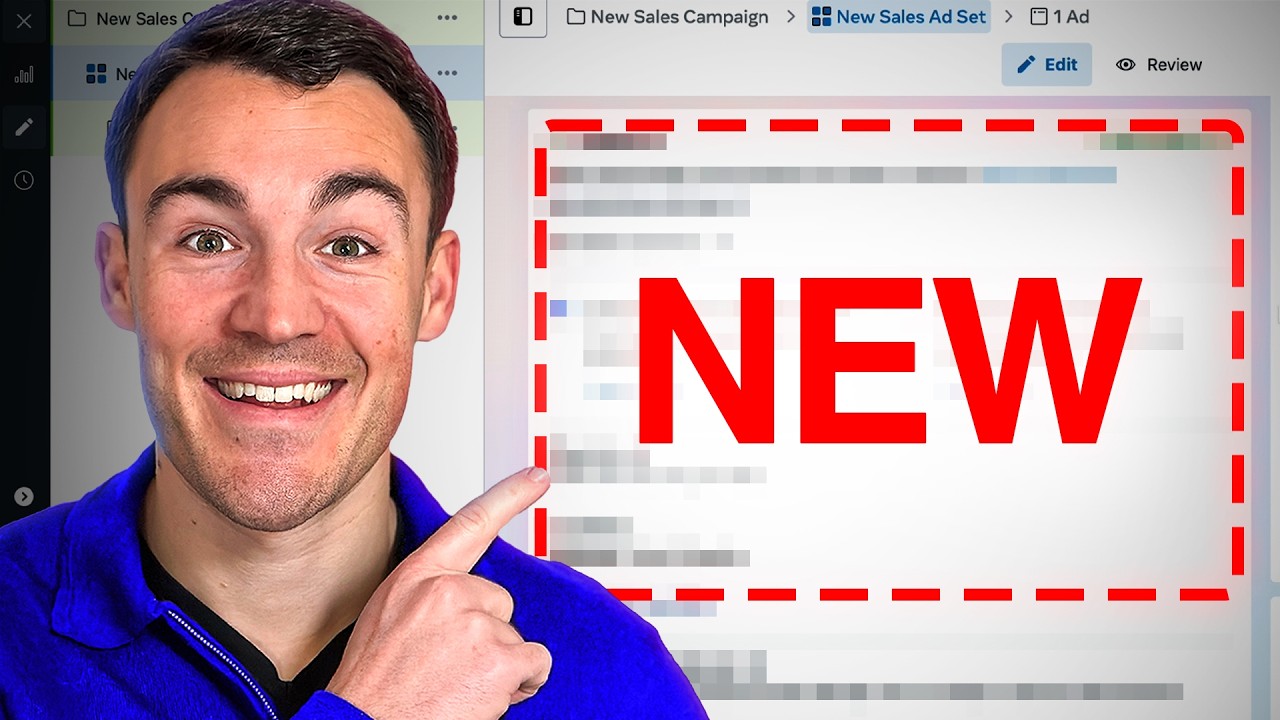
The best Facebook Ads targeting strategy for 2026 uses broader initial audiences and highly focused creative content. Instead of hyper-targeting small audiences, cast wider nets and use performance data to guide optimisation.
Meta offers more robust lookalike audience capabilities that need fewer seed customers. This helps smaller businesses compete.
Setting Up Target Audiences on Meta Platforms
![NEW Meta Ads Targeting Strategy [Better than Broad Targeting]](https://www.edgedigital.net/wp-content/cache/flying-press/70449fbea8b02ea884990c769c0bfe0f.jpg)
Creating effective audiences on Meta platforms requires understanding your options. Configure them properly to reach the right people at the right time.
Defining Target Audience
Successful Meta ads targeting starts with a clear definition of your target audience. Begin with a customer persona outlining key characteristics of your ideal customer.
Meta offers several audience types:
- Core Audiences: Built using demographics, interests, and behaviours
- Custom Audiences: Created from your existing customer data
- Lookalike Audiences: Find people similar to your best customers
Test different audience sizes for best results. Broader audiences often perform better in 2026 due to Meta’s improved algorithms.
The platform now needs fewer targeting signals to find potential customers. Review your audience definitions quarterly as market conditions change.
Configuring Demographics and Interests
When setting up demographics, Meta offers precise options beyond age and gender. You can target based on:
- Location: Countries, regions, cities, or radius around specific points
- Language: Useful for multilingual regions
- Education level: From qualification type to specific institutions
- Relationship status: Including anniversary dates for timely promotions
Meta analyses user behaviour across its platforms for interest targeting. The audience targeting options in 2025 focus more on engagement patterns than explicit interests.
Be cautious with overly narrow interest targeting. Combining too many filters can limit your reach.
Prioritise 2-3 highly relevant interests and let Meta’s algorithm find the right Facebook users.
Leveraging Audience Behaviour Data
Behaviour data reveals what users do, not just what they say they like. You can target based on:
- Device usage: Mobile vs desktop, specific brands, operating systems
- Purchase behaviour: Past spending patterns and buying frequency
- Travel history: Frequent travellers or those planning trips
The Meta Audience Network expands your reach to thousands of apps and websites beyond Facebook and Instagram. This helps capture behaviour data from multiple sources.
Recent updates in 2026 improved the platform’s ability to identify purchase intent signals. Using website activity and conversion tracking gives you more accurate targeting than interests alone.
Create audience segments based on engagement with your previous content. This behavioural indicator is highly effective for conversions.
Advanced Targeting Features in 2026

Meta’s targeting capabilities in 2026 give advertisers more powerful tools. These features use advanced AI, improved audience matching, and dynamic content delivery for better results with less manual work.
AI-Enabled Automation for Audience Segmentation
The Meta Business Help Centre introduced AI-powered audience segmentation tools in 2026. These tools analyse user behaviour patterns to identify potential customers with high accuracy.
The new “Predictive Audiences” feature forecasts which users are most likely to convert based on their interactions across Meta’s ecosystem. This feature removes much of the guesswork in audience building.
The AI processes thousands of signals at once, creating micro-segments that manual methods can’t find. Many advertisers report conversion improvements of 25-40% using these automated segments compared to traditional targeting.
The Meta ads agency platform now includes:
- Behavioural prediction models
- Intent-based grouping
- Multi-platform signal integration
- Auto-optimisation of audience segments
Retargeting and Lookalike Audiences
Retargeting has become more sophisticated in 2026. Meta now offers more granular control over who sees your ads.
The updated targeting options include engagement-based retargeting across all Meta platforms.
Lookalike audiences have evolved beyond simple demographic matching. The system now considers:
| Feature | Benefit |
|---|---|
| Value-based matching | Finds users similar to your highest-spending customers |
| Multi-signal matching | Uses website, app and in-store behaviour |
| Temporal relevance | Prioritises users likely to purchase now |
The “Reach more people likely to respond” feature, highlighted in Facebook Ads Targeting Updates, expands your audience beyond traditional geographical boundaries. This intelligent expansion finds relevant users regardless of location.
You can now create audience segments based on predictive lifetime value. This helps focus your budget on acquiring high-value customers.
Dynamic Creative Optimisation
Dynamic Creative Optimisation (DCO) has transformed in 2026. The system automatically generates and tests thousands of creative variations to identify winning combinations for each audience segment.
The complete Facebook ads guide shows how DCO now incorporates:
- Real-time personalisation: Ads adapt based on user’s immediate context and behaviour.
- Multi-variate testing: The system tests headlines, images, CTAs, and formats at the same time.
- AI-generated elements: The system suggests new creative elements based on performance data.
Advertisers using full DCO capabilities see 30-50% improvements in engagement compared to static ads. The platform now optimises automatically across placement types, delivering the right format for each user.
Integration with product catalogues has improved. This change allows for more seamless shopping experiences directly within ad units.
Optimising Meta Advertising Campaigns

Successful Meta ad campaigns require strategic planning and ongoing refinement. Proper optimisation starts with clear objectives and extends to thoughtful format selection.
Choosing the Right Campaign Objectives
When setting up Meta advertising campaigns, selecting the appropriate objective is crucial. Meta’s Ads Manager offers various objectives aligned with different business goals.
Choose objectives that directly support your specific outcomes instead of generic awareness. For lead generation, the “Lead Generation” objective often outperforms “Traffic” campaigns by focusing on quality conversions rather than just clicks.
For e-commerce businesses, “Catalogue Sales” objectives typically deliver better ROAS by connecting directly with your product feed. This integration allows for dynamic product ads that update automatically.
Your Facebook pages must align with your chosen objectives. A page with strong social proof often yields better results even with identical ad creative.
Ad Format Selection Across Meta Platforms
The right ad format significantly impacts campaign performance across Meta platforms. Recent targeting strategy insights suggest that video formats deliver superior results in 2026.
Consider these effective formats:
- Carousel ads: Showcase multiple products or features.
- Collection ads: Perfect for mobile shopping experiences.
- Reels: Drive strong engagement, especially with younger audiences.
- Stories: Brief, immersive content with strong stopping power.
Video length should be optimised based on placement. For feed placements, 15-30 second videos perform best, while shorter 5-15 second formats work better for Stories.
Maintain cross-platform consistency while optimising for each format. Each Meta platform (Facebook, Instagram, Messenger) responds differently, so adapt creative assets strategically.
Measuring and Enhancing Ad Performance
Effective measurement tools and optimisation strategies are essential for maximising your Meta advertising investment in 2026. Tracking the right metrics helps identify what’s working and where you need to make adjustments.
Performance Tracking and Analytics
Meta’s analytics dashboard has evolved in 2026. It now offers more comprehensive ad metrics to track.
Focus on these key performance indicators:
- Cost per Acquisition (CPA): Measures how much you spend to convert a customer.
- Conversion Rate: Shows the percentage of users who complete desired actions.
- Ad Spend: Tracks your budget utilisation across campaigns.
- Return on Ad Spend (ROAS): Calculates revenue generated per pound spent.
The platform now offers enhanced AI-driven insights that automatically flag performance anomalies and suggest corrections. Predictive analysis helps you anticipate trend changes before they impact your campaigns.
Meta integrates better with third-party analytics, allowing for improved attribution across multiple touchpoints. Combining Meta’s native analytics with Google Analytics gives you the most comprehensive view of customer journeys.
Maximising Engagement and ROI
Advantage+ automation has become central to maximising ROI in 2026. This AI-driven system optimises placements and bidding strategies automatically based on real-time performance data.
To boost engagement rates, use these strategies:
- Creative Rotation: Use at least 3-4 creative variations to prevent ad fatigue.
- Dynamic Content: Add personalised elements that adapt based on user behaviour.
- Video Prioritisation: Short-form videos (under 15 seconds) consistently outperform static images.
A/B testing remains crucial. Test one element at a time to isolate what drives performance improvements.
The platform now offers simplified test setup with statistical significance indicators. Budget pacing has become more sophisticated with predictive allocation features.
These tools shift spending toward better-performing audiences automatically, improving overall ROI.
Understanding Click-Through Rates
Click-through rate (CTR) remains a fundamental metric for gauging ad relevance and appeal in 2025. Average CTRs vary by industry, but we typically see:
| Industry | Average CTR (2025) |
|---|---|
| E-commerce | 1.2% – 1.8% |
| B2B | 0.8% – 1.3% |
| Entertainment | 1.5% – 2.2% |
| Finance | 0.7% – 1.1% |
Improving CTR requires focusing on several key factors. Compelling headlines that create urgency or curiosity generate more clicks than generic messaging.
Personalised ad copy addressing specific pain points increases CTR by up to 25%. Facebook ad targeting strategies directly impact CTR performance.
Refined audience targeting results in higher relevance scores, which Meta’s algorithm rewards with better placement and lower costs. The platform’s new interest clustering feature automatically identifies related interests, expanding reach while maintaining relevance.
Best Practices for Effective Meta Ads Targeting
Successful Meta ads require strategic targeting and proper integration with your marketing efforts. These practices align your ads with broader goals and create meaningful engagement points throughout the customer journey.
Integrating Meta Ads With Overall Marketing Strategy
When planning Meta ads, consider how they complement your entire marketing strategy. Start by defining clear campaign objectives that align with broader business goals.
Decide if you seek awareness, consideration, or conversion. Use consistent messaging across all channels.
Your Meta ads should reflect the same tone and offers as your website, email campaigns, and other digital marketing efforts. Implement the right bidding strategy based on your goals.
Automatic bidding works well for new campaigns. Manual bidding gives more control for experienced marketers.
Analyse performance data weekly and adjust your strategy accordingly. Test different ad formats (carousel, video, collection) to determine what resonates best with your audience.
Establish KPIs beyond clicks and impressions. Focus on metrics that truly impact your business, such as cost per acquisition or return on ad spend.
Improving Customer Engagement Throughout the Customer Journey
To improve engagement, deliver relevant content at each stage of the customer journey. Start with awareness campaigns targeting broad audiences.
Create consideration ads for those who’ve shown interest. Personalise ad content based on user behaviour.
Someone who abandoned a cart needs different messaging than a first-time visitor. Utilise Meta’s advanced targeting features to reach users at critical decision points:
- Retarget website visitors with product-specific offers.
- Create lookalike audiences based on high-value customers.
- Segment by engagement level (video views, page interactions).
Implement effective bidding optimisation to ensure ads appear when they’ll have the most impact. Time your campaigns to align with your audience’s active hours.
Interactive ad formats like polls and instant experiences drive higher engagement rates than static images. Authentic content usually outperforms overly polished advertisements.
Navigating Compliance and Privacy in the UK
The UK’s approach to online privacy and data protection has become increasingly stringent in 2026. These changes affect how Meta handles targeted advertising.
New restrictions now limit how businesses can collect and use personal data for marketing purposes.
Understanding Data Protection Regulations
UK data protection laws have evolved in response to growing privacy concerns. Meta now tightens data sharing restrictions for businesses advertising on Facebook and Instagram.
You must stay vigilant about data handling practices. These changes follow Meta’s settlement with a UK citizen regarding personalised advertisements.
Meta agreed to stop targeting that individual with such ads. This landmark case has ripple effects for all UK advertisers.
In 2025, marketing compliance in the UK has become more complex. Businesses must now navigate new regulations while still reaching their target audiences effectively.
Working With the ICO and Best Practice
The Information Commissioner’s Office (ICO) has launched a new online tracking strategy to create a fairer ecosystem for people and businesses. We recommend that you review these guidelines to stay compliant.
Best practices now include:
- Obtaining clear consent before collecting any user data
- Providing straightforward opt-out mechanisms for personalised advertising
- Maintaining detailed records of data processing activities
- Conducting regular privacy impact assessments
Meta is exploring ad-free subscription options for UK users as an alternative to personalised advertising. Businesses should prepare contingency plans to reach audiences if these models become more common.
Ad Management Tools and Resources
Meta offers platforms to manage your ad campaigns effectively in 2026. These tools help you create, monitor, and optimise your advertising efforts with ease.
Using Meta Ads Manager and Business Suite
Meta Ads Manager serves as the main hub for advertising activities in 2026. You can create campaigns, manage budgets, and track performance in one place.
The interface is now more intuitive. Creating new campaigns takes fewer clicks, and the reporting dashboard offers more customisation.
Meta Business Suite brings your Facebook and Instagram presence together. Businesses can save time by using the unified inbox and content scheduling features.
Key features in 2026 include:
- Automated campaign optimisation suggestions
- Enhanced audience insights with privacy-compliant data
- Cross-platform creative testing tools
- Improved targeting options for reaching specific audiences
Leveraging Ads Manager for Success
To boost your campaign performance, explore the advanced features in Ads Manager. The expanded A/B testing allows you to test more variables and find what works best for your audience.
The Meta marketing tools now use AI-powered recommendations to analyse your campaign data and suggest improvements. These insights help you adjust bidding strategies and budgets for better results.
Campaign Budget Optimisation (CBO) now distributes your budget across ad sets for maximum results. This works well with the expanded conversion objectives in 2025.
Use the automated rules feature to keep campaigns efficient without constant monitoring. Set rules to pause underperforming ads or boost budgets for high performers.
Frequently Asked Questions
Meta’s advertising platform has changed significantly in 2025. New targeting requirements, AI tools, and compliance standards shape how marketers create campaigns while following privacy regulations.
How has Meta’s ad targeting options evolved by 2025?
Meta’s targeting capabilities have changed in 2025 to balance privacy and advertising effectiveness. The updated requirements for customer lists took effect in March 2025.
These requirements bring stricter data quality standards, especially for sensitive ad categories. There is now a shift toward contextual and behavioural targeting instead of relying on third-party data.
Meta’s new AI-driven targeting tools identify potential customers through engagement patterns. This marks a new approach to audience segmentation.
What are the new alternatives to interest targeting for WhatsApp messaging ads?
For WhatsApp messaging ads, Meta now offers strong alternatives to traditional interest targeting in 2025. Conversion API integration lets advertisers send first-party data directly to Meta.
The “Engagement Patterns” targeting feature analyses user interactions with WhatsApp business accounts to find potential customers with similar communication styles. This benefits service-based businesses.
Meta also introduced “Communication Style Matching,” which aligns ad delivery with users’ messaging preferences—such as formal, casual, visual, or text-heavy communication.
Is there a current list of detailed targeting options available for Facebook Ads in 2025?
Yes, resources catalogue Meta’s current targeting options. LeadSync provides a complete targeting list for interests, demographics, and behavioural targeting on Facebook and Instagram ads.
The biggest change in 2025 is the reorganisation of targeting categories for privacy regulations. Some options have been consolidated or removed.
Meta now offers more granular targeting within broad categories, while limiting options in sensitive areas like health, politics, and personal attributes.
What are the most effective strategies for Meta ad targeting as of 2026?
Effective Meta targeting strategies in 2026 use first-party data and AI-powered optimisation. Dynamic content and placement now play a key role in improving performance.
Lookalike audiences based on high-value customer data perform well, especially when combined with Meta’s new AI tools that predict customer behaviour.
A hybrid approach that combines broad targeting with specific exclusions often outperforms narrow campaigns. This gives Meta’s algorithms flexibility to find potential customers and maintain efficiency.
How can one address issues when detailed targeting is not functioning in Meta Ads Manager?
If you face detailed targeting issues in Meta Ads Manager, first check compliance with Meta’s updated ad guidelines for 2026. Many problems come from policy violations that are not obvious.
Start technical troubleshooting by clearing your browser cache and cookies, as Ads Manager can malfunction due to cached data. Use Meta’s Business Help Centre to find solutions for specific error messages.
For ongoing issues, rebuild audiences instead of editing old ones. This often resolves targeting problems caused by legacy settings.
In what ways is Meta advertising considered a worthy investment for marketers in 2026?
Meta advertising remains a worthy investment in 2026 due to its unmatched audience size. Marketers benefit from increasingly sophisticated targeting capabilities.
The platform’s complete ad ecosystem offers diverse campaign formats across Facebook, Instagram, WhatsApp, and Messenger.
Meta’s enhanced AI optimisation tools have improved return on ad spend for many advertisers. These advancements help marketers identify high-potential customers more effectively.
Meta’s cross-platform attribution now provides more accurate insights into the customer journey in 2026. Marketers can make more precise budget allocation decisions with this improved data.