Artificial intelligence is transforming the advertising landscape in remarkable ways.
AI tools now generate engaging ad content, optimise campaign performance, and increase return on investment across channels.
Marketing professionals see a significant shift in ad creation and deployment.
Platforms like AI-powered advertising solutions help businesses find new customers more efficiently than ever before.
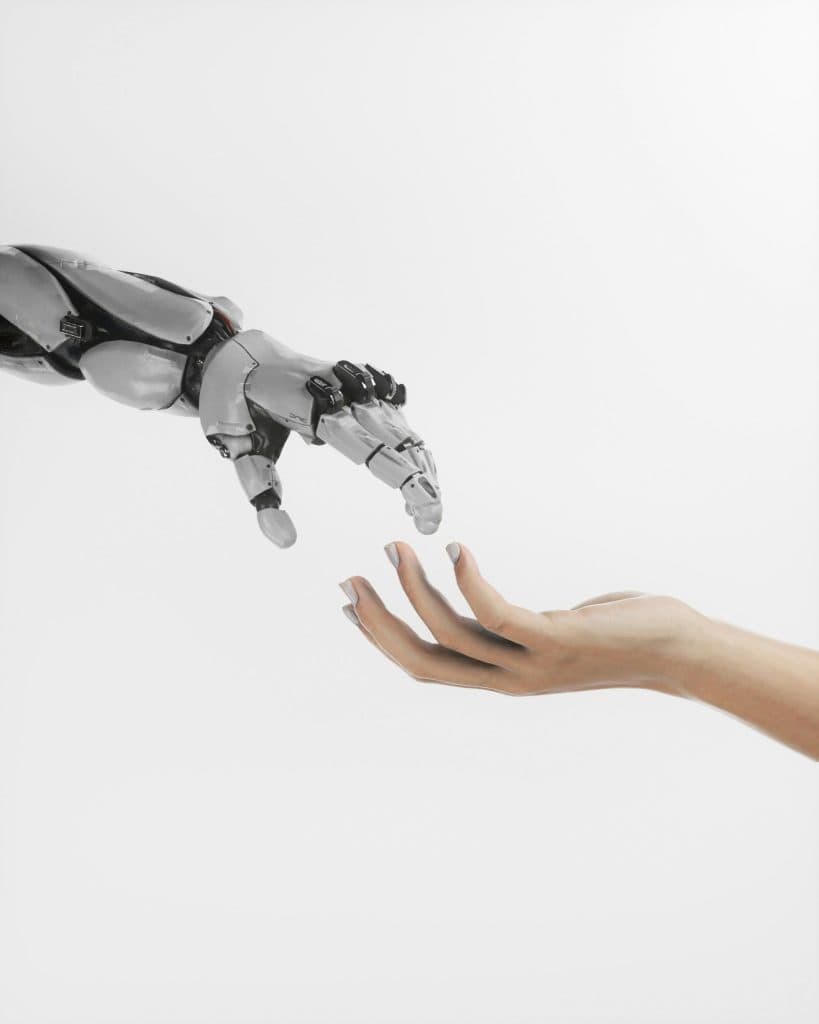
The advertising world has embraced AI technology to handle everything from creating ad copy to predicting campaign performance.
Specialised tools now allow even those without design skills to produce professional advertisements instantly.
This democratisation of ad creation lets businesses of all sizes compete with larger corporations in creative quality and market reach.
Key Takeaways
- AI advertising tools generate high-quality banners, videos, and text ads that outperform traditional methods.
- Marketing professionals can test more advertising variations with less effort, leading to improved campaign results.
- The future of advertising uses AI-powered solutions to help businesses connect with their ideal customers more efficiently.
The Fundamentals of AI in Advertising

Artificial intelligence has changed how advertisers connect with audiences and optimise campaigns.
The technology analyses data, learns patterns, and predicts outcomes that humans might miss.
Understanding Artificial Intelligence
AI in advertising means using computer systems to perform tasks that usually require human intelligence.
These systems analyse large amounts of data to identify patterns and make decisions without explicit programming.
Machine learning, a subset of AI, helps advertising platforms improve automatically through experience.
The technology learns from past campaigns to optimise future performance.
Today, marketers use AI for many tasks, from content generation to budget optimisation.
These tools help marketers create more effective campaigns by predicting which messages will resonate with specific audiences.
Generative AI has changed creative processes by producing images, videos, and copy that human marketers can refine.
This technology creates personalised content at scale.
AI’s Role in Modern Marketing Strategy
When we integrate AI into marketing strategy, businesses use data more effectively and reach potential customers with tailored messaging.
This approach especially benefits personalisation efforts.
AI tools analyse consumer behaviour across channels to deliver the right message at the right time.
These tools adapt content dynamically based on individual preferences and browsing history.
AI’s predictive capabilities make budget allocation more scientific.
The technology can forecast campaign performance and suggest optimal spending distribution across platforms and audience segments.
We must consider ethical implications when using AI marketing solutions.
Transparency about AI in advertising helps maintain consumer trust and comply with new regulations.
Maximising Customer Engagement
AI technologies have changed how brands connect with audiences.
These tools enable deeper, more meaningful interactions through personalised content and timely responses.
Personalised Experiences and AI
AI lets us deliver personalised customer experiences at scale.
By analysing customer data, AI finds patterns and preferences that would be impossible to spot manually.
We can now tailor content to individual users based on:
- Previous purchasing behaviour
- Website browsing history
- Demographic information
- Time of day they typically engage
This personalisation goes beyond simple product recommendations.
AI can customise entire user journeys, from initial ad exposure to post-purchase follow-up.
Brands using AI-driven personalisation typically see conversion rates increase by 20-30%.
This technology also helps reduce customer acquisition costs by focusing resources on prospects most likely to convert.
Real-Time Engagement through AI
AI-powered real-time engagement changes how we interact with customers at important moments.
These systems monitor user behaviour and trigger appropriate responses instantly.
For example, AI can:
- Detect when a customer is struggling with checkout
- Identify browsing patterns indicating high purchase intent
- Recognise when a visitor might abandon their cart
These insights lead to immediate action.
We might offer a timely discount, suggest complementary products, or start a helpful chatbot conversation.
Real-time personalisation shows customers we understand their needs at that exact moment.
This attentiveness builds trust and loyalty.
The technology also helps optimise advertising spend by adjusting campaigns instantly based on performance metrics.
Enhancing Customer Experience with Chatbots
Modern AI chatbots provide instant customer support that feels remarkably human.
These tools now do much more than answer simple FAQs.
Today’s advanced chatbots can:
| Capability | Benefit |
|---|---|
| Natural language processing | Understands complex customer queries |
| Sentiment analysis | Detects customer frustration or confusion |
| Machine learning | Improves responses over time |
| Multi-channel integration | Provides consistent experience across platforms |
Chatbots handle routine enquiries, freeing human agents for more complex issues.
This improves efficiency while maintaining high service standards.
Chatbots offer 24/7 availability, which matters in global markets where customers expect support anytime.
Implementing AI chatbots can reduce response times by up to 80% while keeping customer satisfaction high.
AI-Driven Marketing Campaigns
AI technology has changed how brands create and deliver marketing campaigns.
These tools help us craft more effective content and deliver personalised experiences that resonate with customers.
Designing AI-Powered Marketing Content
AI tools now let us generate and optimise marketing content with greater efficiency.
Brands use AI to create everything from ad copy to social media posts that engage audiences better.
For example, AI analyses top-performing content across industries and suggests improvements to headlines, calls-to-action, and messaging structure.
Key benefits include:
- Faster content creation (hours instead of days)
- Data-driven creative decisions
- Consistent brand voice across all channels
- A/B testing at scale to find winning formulas
Many marketing teams use AI to create initial drafts.
This lets human creativity focus on refinement and strategy instead of starting from scratch.
Optimising Conversion Rates with AI
AI advertising solutions are changing how we approach conversion rate optimisation.
These tools analyse user behaviour patterns to reveal what drives conversions.
AI algorithms can:
- Predict which audience segments are most likely to convert
- Recommend optimal ad placements and timings
- Automatically adjust bids based on conversion probability
- Identify underperforming elements in the conversion funnel
AI-powered optimisation typically results in 15-30% higher conversion rates compared to traditional methods.
The technology finds correlations humans might miss.
For example, AI might discover that certain combinations of images and headlines work especially well with specific audience segments at certain times of day.
Personalising Email Campaigns
Email marketing has changed with AI-powered personalisation.
Today’s AI tools analyse customer data to deliver relevant content to each recipient.
Modern AI email systems can:
- Segment audiences by behaviour, not just demographics
- Predict the best sending times for each recipient
- Customise subject lines based on preferences
- Generate product recommendations that match purchase history
Personalised email campaigns usually see 2-3× higher open and click-through rates than generic messages.
AI-driven campaigns also reduce unsubscribe rates because recipients get content that interests them.
AI in E-Commerce and Product Discovery
Artificial Intelligence is changing how online retailers connect customers with products through smarter search systems and personalised experiences.
These technologies analyse shopping patterns and preferences to create more intuitive shopping journeys that boost conversion rates and customer satisfaction.
AI and Personalised Product Catalogs
Modern e-commerce platforms now use AI-powered search and product discovery systems. These systems dynamically adjust what customers see based on their unique preferences.
These intelligent systems create shopping experiences that feel custom-built for each visitor. When we implement AI for product catalogues, we can automatically highlight items most relevant to each shopper.
AI systems analyse previous purchases, browsing history, and demographic information. They curate personalised selections instead of displaying the same products to everyone.
The technology effectively simplifies product discovery for shoppers facing extensive product catalogs. AI shopping assistants interpret natural language queries and understand context.
These assistants help customers find exactly what they need without navigating complex category structures. This personalisation extends to product recommendations as well.
AI algorithms identify patterns in purchasing behaviour. They suggest complementary items and alternatives that align with customer preferences.
Predictive Analytics in Customer Behaviour
Predictive analytics stands out as one of the most powerful applications of AI in e-commerce. We can now forecast customer actions before they occur.
This ability allows businesses to position products strategically when shoppers are most receptive. By analysing vast datasets of customer behaviour, AI systems identify subtle patterns humans would likely miss.
These insights help us understand the customer journey from initial interest to purchase decision. AI tools track metrics like:
- Time spent viewing specific products
- Seasonal buying patterns
- Price sensitivity thresholds
- Abandonment triggers in the checkout process
These insights enable more effective inventory management and marketing budget allocation. Retailers can stock products that align with predicted demand and create targeted promotions for specific customer segments.
Innovations in Marketing Automation and Efficiency
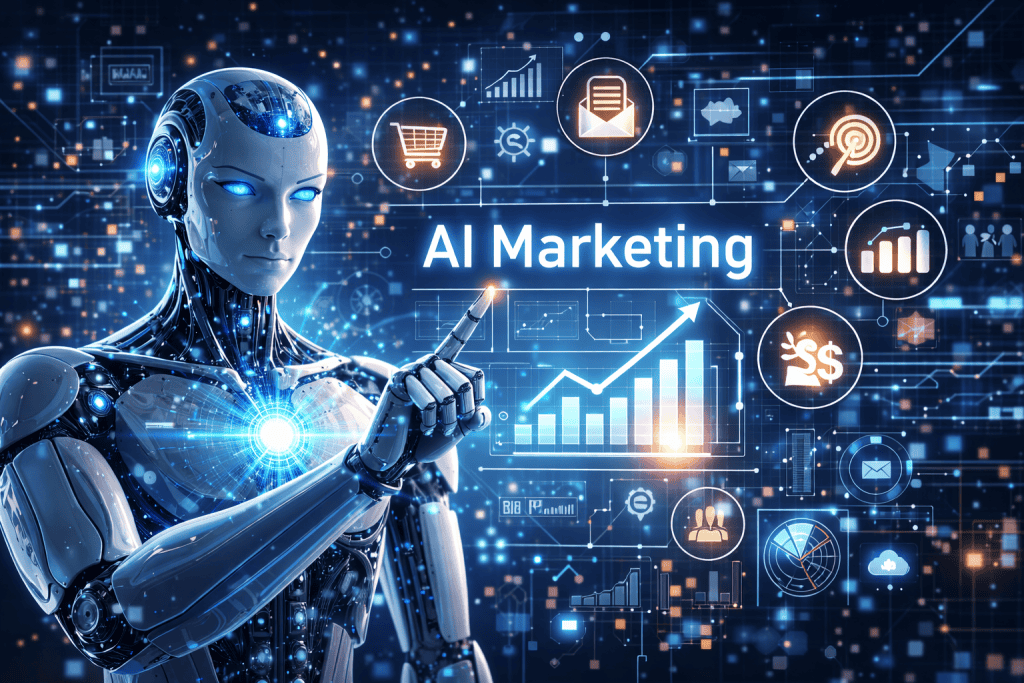
AI technology is revolutionising the marketing landscape by offering powerful automation tools. These tools save time and improve results.
These innovations allow marketers to focus on strategy while machines handle repetitive tasks with greater precision. Marketing departments face increasing pressure to deliver more with limited resources.
AI-powered automation tools help meet this challenge. AI enhances efficiency by reducing time spent on monotonous activities.
Teams can then focus on strategy and creative thinking. We’ve seen remarkable improvements in campaign management systems that automatically optimise send times, segment audiences, and personalise content at scale.
Modern CRM platforms use AI to analyse customer interactions. They automatically route leads to the appropriate sales funnel.
Email marketing has been transformed with AI systems that craft subject lines, test content variations, and schedule deliveries for maximum open rates. These tools analyse thousands of data points in seconds.
AI Tools for Marketing Teams
Marketing professionals now have access to an impressive array of AI-powered solutions. These tools help teams work smarter rather than harder.
Content creation assistants generate draft copy and suggest improvements. They maintain brand voice consistency across all channels.
Visual AI tools now create and edit images for campaigns without requiring advanced design skills. AI models quickly identify optimal campaigns for each customer and determine next-best-actions.
This capability streamlines the decision-making process, especially for multi-channel campaigns. Social media management has been revolutionised with AI tools that recommend optimal posting times and suggest trending hashtags.
These tools even generate engagement-focused content based on audience preferences.
Performance Marketing and Machine Learning
The combination of performance marketing and machine learning has created new opportunities for campaign optimisation. We’re now able to predict outcomes with remarkable accuracy.
Predictive analytics and forecasting enable us to anticipate future trends and customer behaviours. These insights allow for proactive strategy adjustments.
Machine learning algorithms continually refine targeting parameters based on real-time performance data. This process creates a cycle where campaigns become more efficient over time without manual intervention.
AI systems automatically redistribute budget spending towards the highest-performing channels and creatives. These systems detect subtle patterns in consumer behaviour that humans might overlook.
Assessing the Impact of AI
Artificial intelligence has revolutionised advertising by delivering measurable benefits across various dimensions. Companies are seeing substantial improvements in their bottom line and customer engagement metrics.
Evaluating AI-Driven Cost Savings
AI technologies dramatically reduce advertising costs through automation and optimisation. Our research shows that AI-powered ad buying platforms can lower customer acquisition costs by 30-50% compared to traditional methods.
AI analyses vast datasets instantly and eliminates wasteful ad spending. It identifies which channels deliver the best results and redistributes budgets accordingly.
AI algorithms also optimise ad timing based on purchase frequency. This ensures adverts appear when viewers are most likely to buy.
This precision timing increases conversion rates while reducing the number of impressions needed.
Key Cost Saving Benefits:
- Automated bidding systems that adjust in real-time
- Reduction in human error and manual optimisation time
- Predictive analytics that prevent investment in poor-performing channels
- Decreased need for extensive A/B testing through AI-powered simulations
Impact on Revenue Growth
AI applications for marketing directly contribute to revenue growth by improving targeting precision and personalisation capabilities. Companies implementing AI-driven advertising report average revenue increases of 15-25%.
The most significant revenue driver comes from AI’s ability to identify high-value customer segments previously undetected by traditional analysis. These newly discovered segments often yield 2-3x higher conversion rates.
Dynamic pricing models powered by AI can increase profit margins by 5-10%. They optimise prices based on demand, competition, and customer willingness to pay.
Predictive lead scoring helps sales teams prioritise prospects most likely to convert. This efficiency improves close rates by up to 30%.
The Transformative Power of AI on the Customer Journey
AI transforms the customer journey by creating highly personalised experiences at each touchpoint. Data-driven insights from AI help us understand exactly when and how to engage prospects.
Chatbots and virtual assistants powered by natural language processing provide immediate, 24/7 customer service. This instant gratification increases engagement rates by 40% compared to traditional support channels.
AI analyses customer behaviour patterns to predict future needs. This enables us to deliver proactive content and offers before customers actively seek solutions.
Customer Journey Improvements:
- Personalised product recommendations based on browsing history
- Sentiment analysis to gauge customer satisfaction in real-time
- Predictive models that identify at-risk customers before they churn
- Automated content creation tailored to individual preferences
The four key elements where AI excels—targeting, personalisation, optimisation, and analytics—create seamless customer experiences that drive loyalty and repeat purchases.
AI and the Future of Advertising
Artificial intelligence is transforming advertising with predictive capabilities and personalized content creation. These innovations are reshaping how brands connect with audiences while raising important questions about privacy and transparency.
Predictions and Trends in AI Marketing
We expect AI-powered predictive analytics to become essential for forecasting consumer behaviour and market trends. This technology enables advertisers to anticipate needs rather than simply react to them.
By 2026, we anticipate that AI will transform marketers’ daily workflows from content creation to crisis management. This shift will make data-driven decision making more accessible to companies of all sizes.
Generative AI tools will revolutionise creative development. They will produce variations of adverts tailored to specific audience segments.
This personalisation will likely improve engagement metrics substantially. AI-optimised ad budgets will become standard practice.
Algorithms will determine the most effective channel mix and timing. These systems will continuously learn and improve, making campaigns more efficient.
Ethical Considerations and AI
We must address the ethical implications of AI marketing tools, particularly regarding data privacy. The collection and analysis of consumer information requires transparent policies and consent mechanisms.
Algorithmic bias presents another significant challenge. AI systems trained on flawed data may perpetuate stereotypes or unfairly target vulnerable populations.
Regular auditing of these systems is essential. The authenticity of AI-generated content raises concerns about trust.
Consumers deserve to know when they’re interacting with artificial rather than human-created advertising. Accountability frameworks must evolve alongside the technology.
We believe clear guidelines for AI use in advertising will help maintain ethical standards while fostering innovation. Balancing automation with human oversight remains crucial.
The most effective approaches will combine AI efficiency with human creativity and ethical judgement.
Frequently Asked Questions
Artificial intelligence is transforming advertising in multiple ways, from content creation to campaign optimisation. Below we address common questions about how AI can improve your advertising efforts and which tools might best suit your needs.
How can artificial intelligence be utilised to create advertisements?
AI can generate advertising content through natural language processing and image generation technologies. These systems analyse successful ads and consumer preferences to create compelling copy, images, and even video concepts.
Tools like Jasper and Copy.ai can write ad copy that resonates with specific target audiences. For image creation, systems such as DALL-E and Midjourney can produce visuals based on text prompts.
AI can also personalise advertisements for different audience segments automatically. It creates variations that speak directly to different consumer needs and preferences.
What are the leading AI tools available for advertising purposes?
Several powerful AI tools help advertisers enhance their campaigns. Google’s AI marketing tools optimise campaigns through automated bidding and audience targeting.
Platforms like Albert AI and Pattern89 analyse advertising performance and make real-time adjustments to improve results. For creative development, Adobe’s Sensei provides AI-powered design and editing capabilities.
Persado generates emotionally targeted language for advertising. Phrasee creates high-converting email subject lines and social media content.
In what ways has artificial intelligence been implemented in advertising campaigns?
AI creates highly personalised advertising experiences for consumers. Netflix uses AI algorithms to display different artwork for the same show based on viewing history.
Programmatic advertising platforms use AI to purchase ad space in real-time auctions. Advertisers reach the right audience at the optimal price.
AI-powered predictive analytics help advertisers forecast campaign performance and consumer behaviour patterns. Amazon uses this technology to recommend products through targeted advertisements.
What are the benefits of employing AI in the development of ad creatives?
AI reduces production time and costs for creative development. Tasks that once took days now take hours or minutes.
AI enables personalisation at scale. Marketing experts say personalised content outperforms generic messaging in engagement and conversion rates.
AI makes creative testing more efficient by rapidly analysing which elements resonate with audiences. This data-driven approach removes guesswork from creative decisions.
Can artificial intelligence manage and optimise Google advertising campaigns?
AI manages Google Ads campaigns with automated bidding strategies that optimise for specific business goals. These systems analyse historical performance data and adjust bids in real time.
Google’s Smart Bidding uses machine learning to maximise conversions within budget constraints. It evaluates signals such as device, location, time of day, and user behaviour patterns.
Third-party tools like Adalysis and Optmyzr use AI to identify opportunities for campaign improvement. These AI-powered solutions continuously monitor and adjust campaigns for optimal performance.
Are there any free AI applications for producing video adverts?
Several platforms offer free or freemium AI tools for video advertisement creation.
Lumen5 provides a free tier. It converts text content into short social media videos using AI.
InVideo offers a limited free plan. This plan includes AI-powered templates and a text-to-video feature.
Users can create professional-looking advertisements without extensive video editing knowledge.
Open-source options like RunwayML have free features for basic AI video generation and editing.
These free versions have limitations in output quality or quantity. They give small businesses and individuals a good starting point for exploring AI video creation.